Agilent Has Built an Annuity on Merck’s Clinical Programme, One Indication at a Time
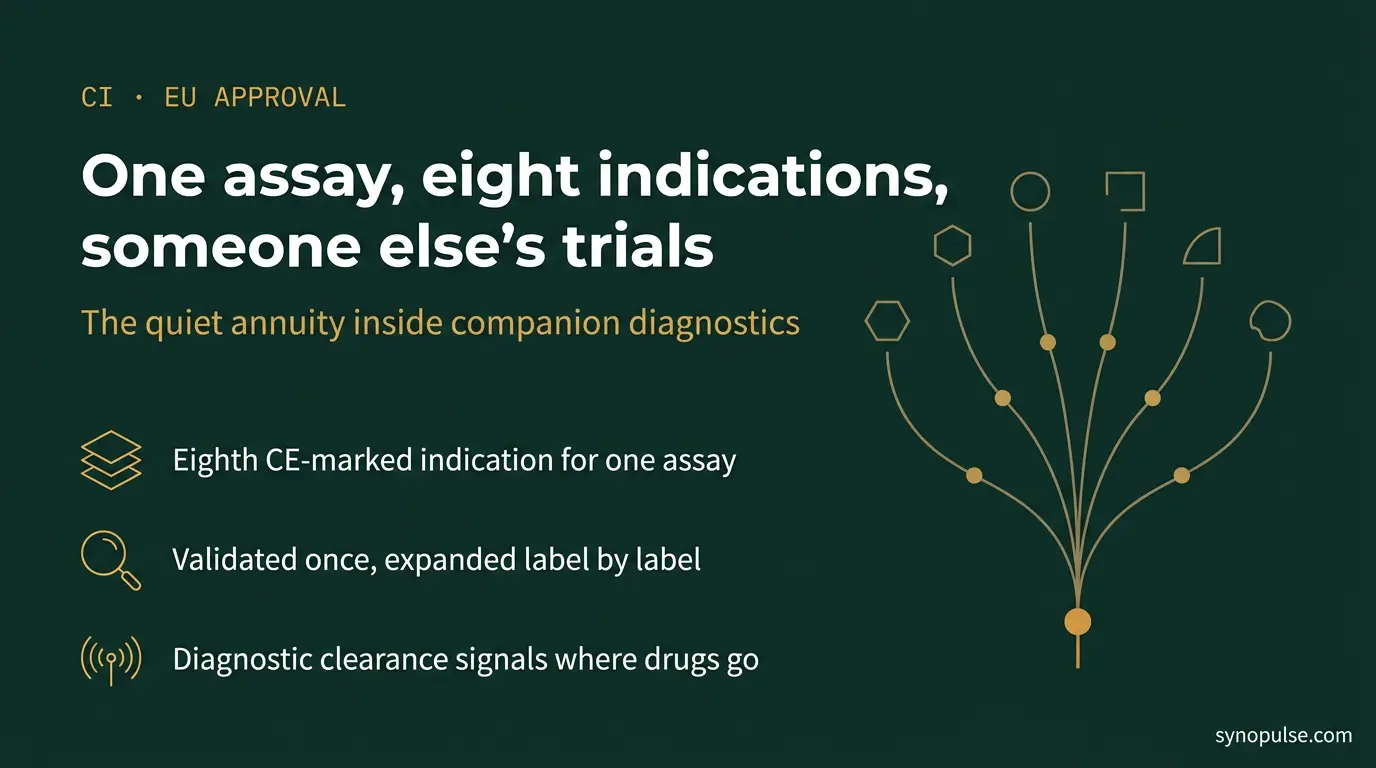
Agilent won its eighth CE-marked companion diagnostic indication for a single PD-L1 assay, each one riding on a label expansion Merck paid to generate.

Agilent won its eighth CE-marked companion diagnostic indication for a single PD-L1 assay, each one riding on a label expansion Merck paid to generate.

China approved Haisco’s ciprocopan for PNH, the world’s first once-daily oral complement Factor B inhibitor, a month after a US small-cap licensed ex-China rights.
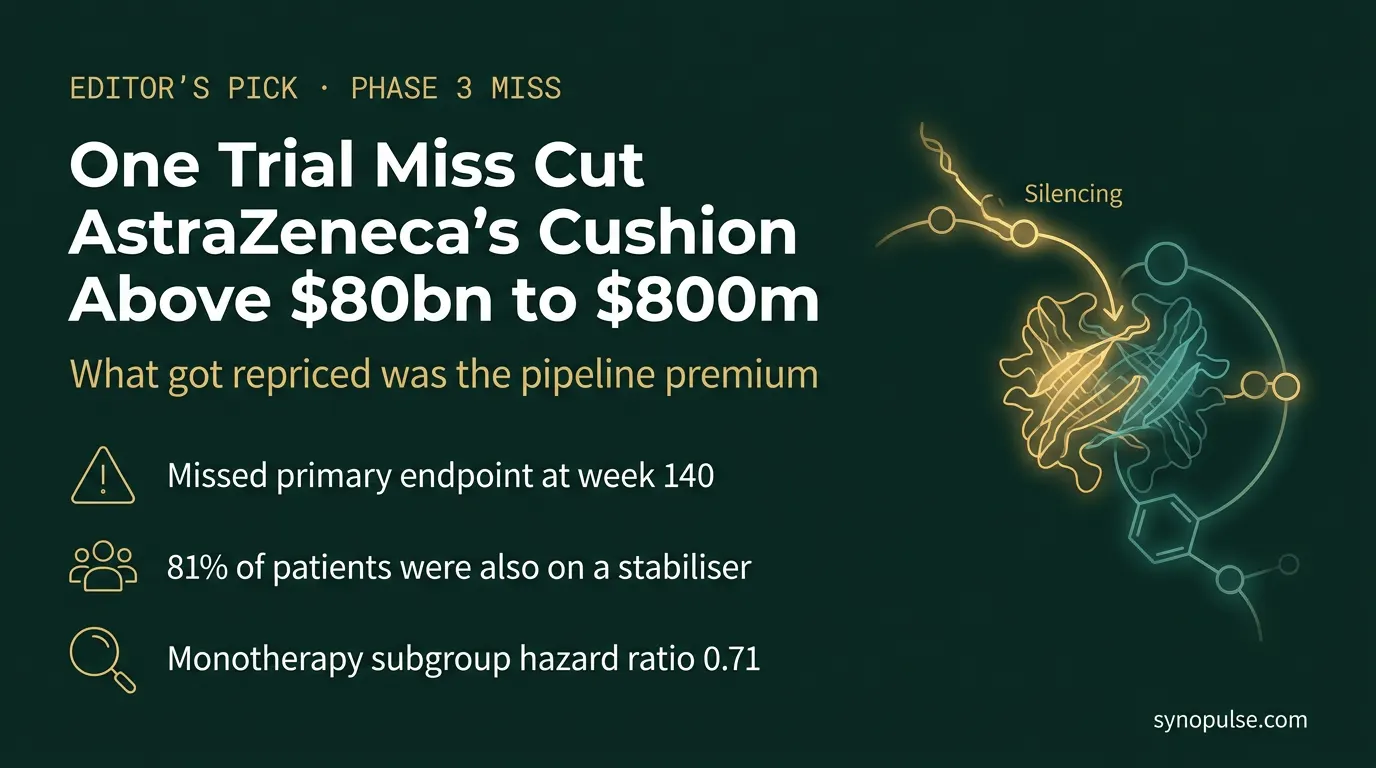
A drug worth $1.9bn of 2030 revenue cost AstraZeneca £19bn in a day, leaving roughly $800m of headroom above its $80bn goal with the risky readouts still ahead.
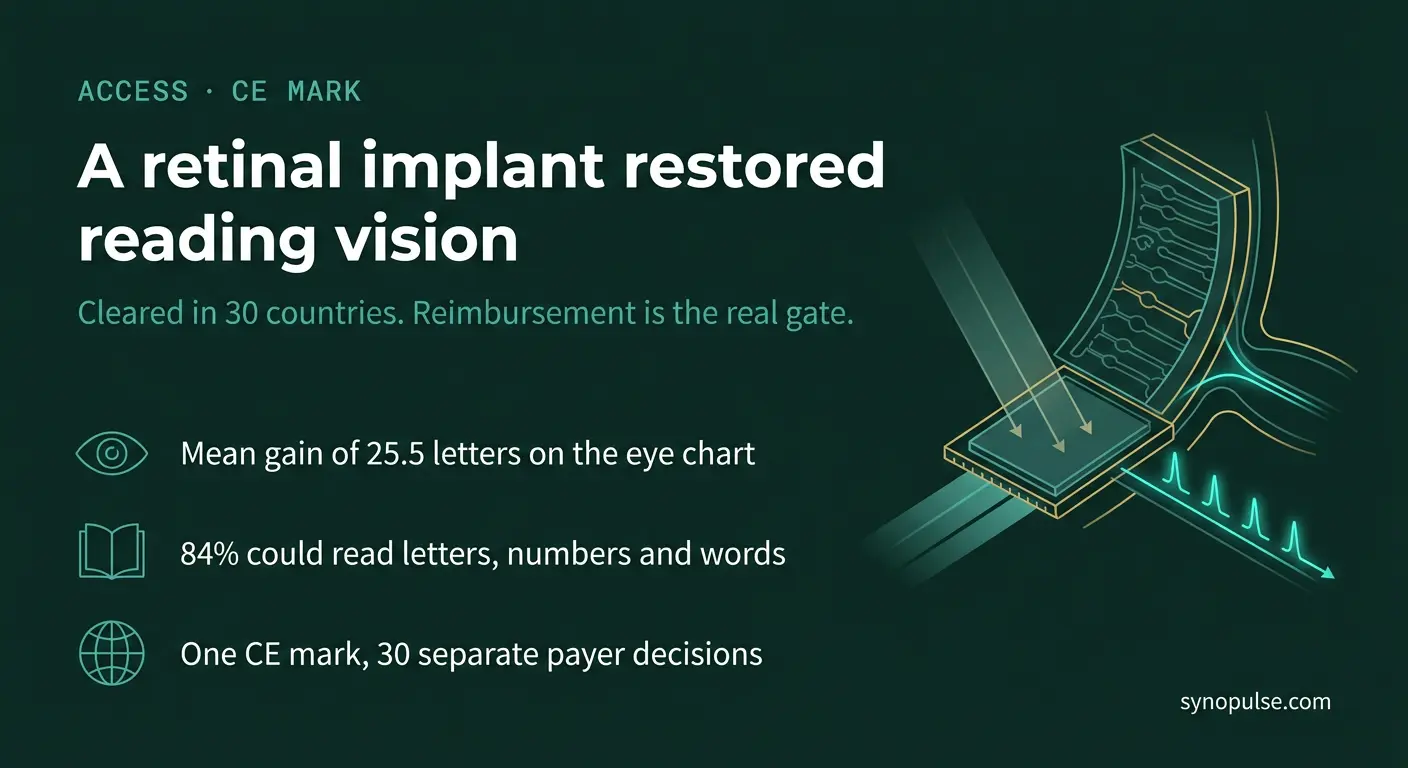
Science Corp’s retinal implant won a CE mark for sale across 30 European countries, after trial patients gained a mean 25.5 letters of visual acuity.

Novo Nordisk filed a Lanham Act suit over Lilly’s Zepbound ads, arguing a genuine head-to-head result became misleading once a higher Wegovy dose launched.

GSK closed its Nuvalent acquisition on 15 July. The FDA approved Jideytro on 22 July, two months ahead of schedule, making it GSK’s first lung cancer drug.

ABILITY Neurotech recorded human neural data for the first time during tumour surgery in Munich, its first step toward a long-term implantable brain-computer interface.

The only FDA-cleared non-drug treatment for pediatric ADHD launched its second generation into a 1,500-family waitlist, with reimbursement still the open question.
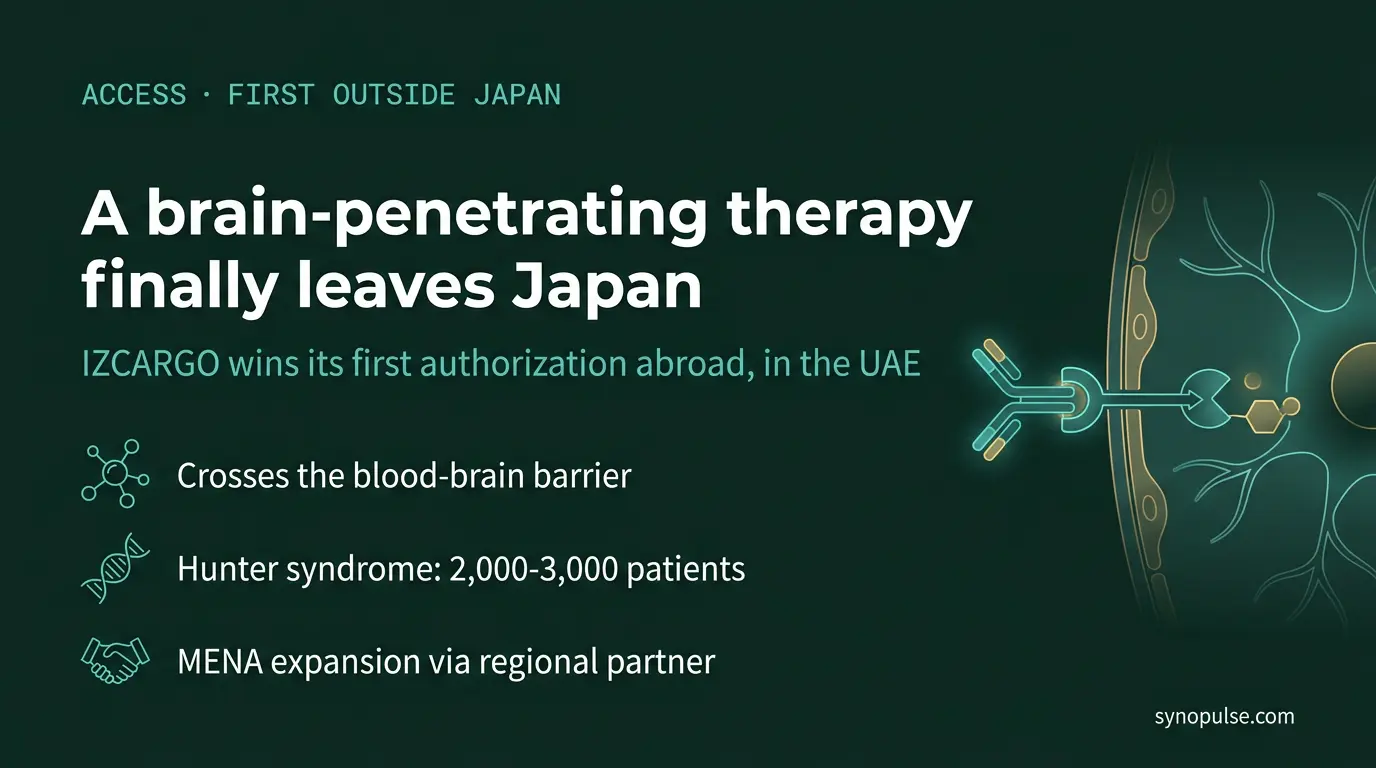
IZCARGO, a therapy engineered to cross the blood-brain barrier, won its first marketing authorization outside Japan five years after launching there.
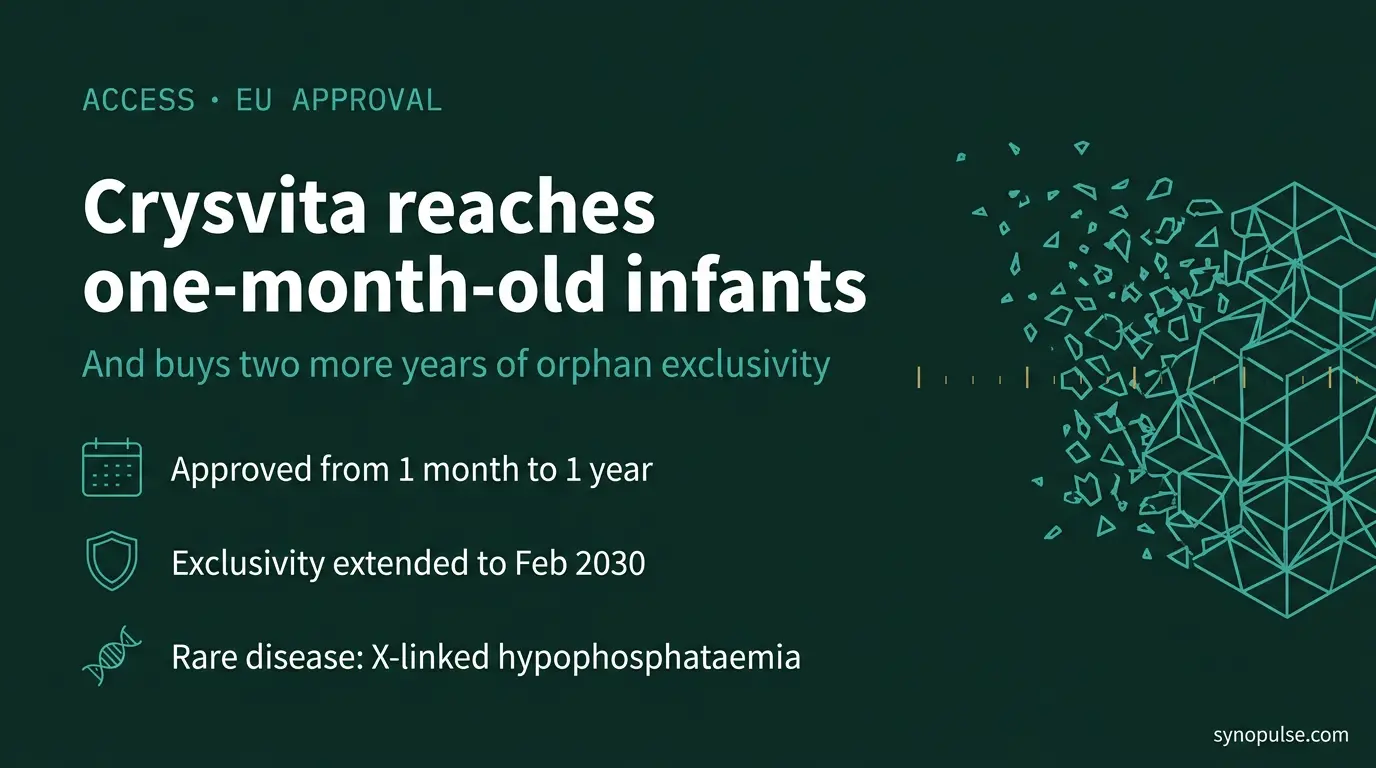
The European Commission approved Crysvita for infants as young as one month with XLH, a decision that also buys Kyowa Kirin two more years of orphan exclusivity.