China Ordered Rare Disease Clinics in Every Province by December and Left Payment Out
Every instruction raises the number of diagnosed patients. None addresses what they can be prescribed, or who pays.

Every instruction raises the number of diagnosed patients. None addresses what they can be prescribed, or who pays.

Seventeen treated children carried a gene therapy to standard full approval. Effect size did the work design could not.
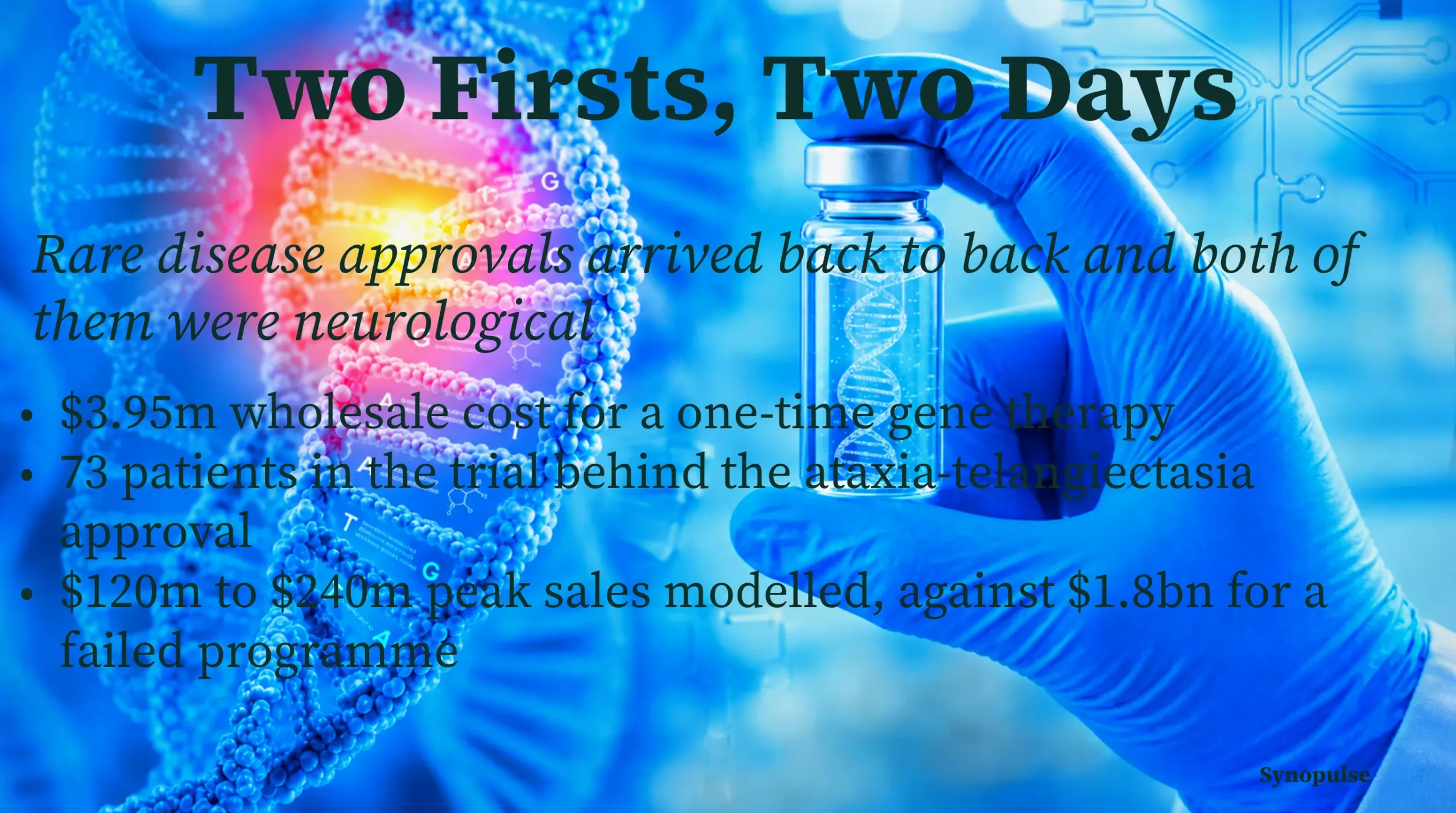
The FDA approved first-ever treatments for Sanfilippo syndrome type A and ataxia-telangiectasia a day apart. Both diseases destroy the nervous system.

Five days after Tarsus paid $450 million for a Stargardt asset reading out in 2029, the competitor got a PDUFA date of 12 February 2027.

Tarsus committed $450 million at signing for a Stargardt asset whose pivotal trial reads out in 2029, while a competitor is already filing.
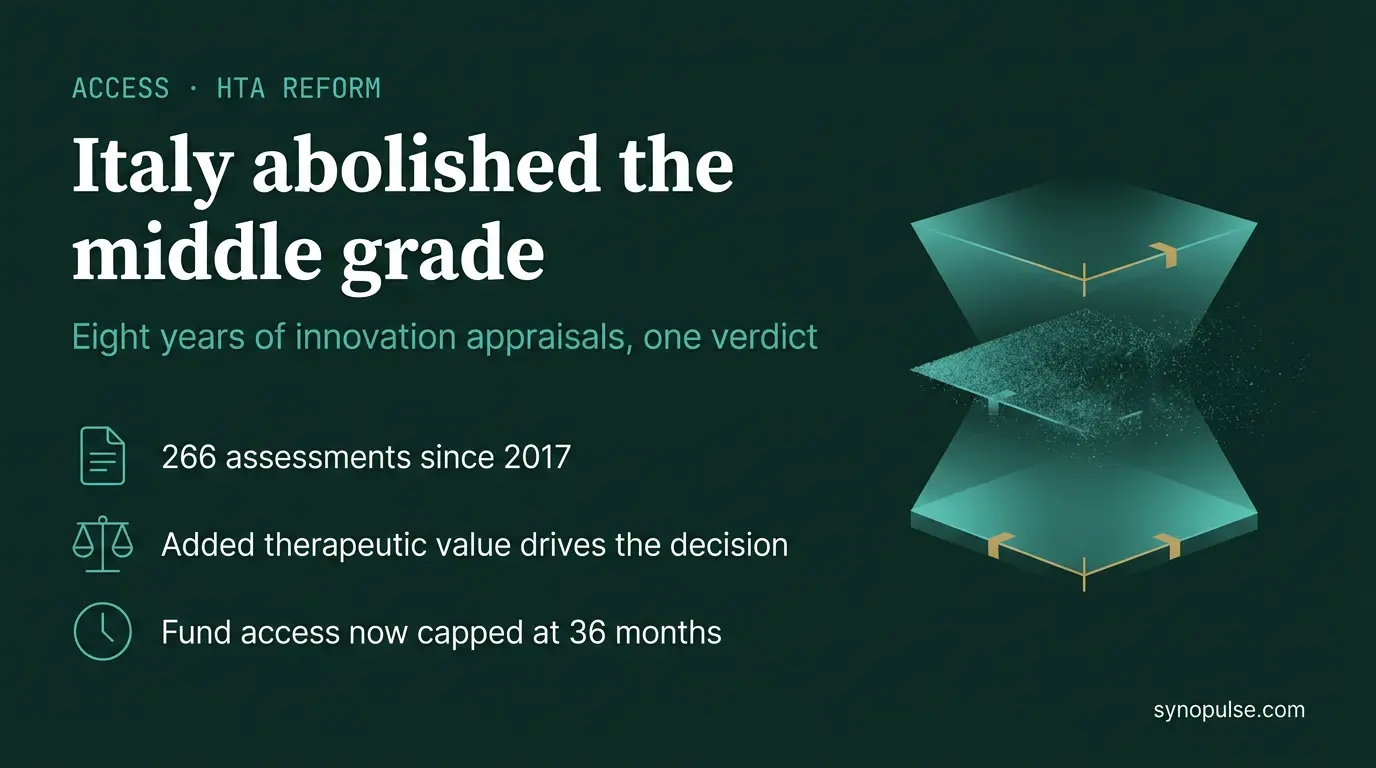
Italy graded new medicines full, conditional or not innovative for eight years. The 2025 reform abolished the middle grade, because almost nothing ever graduated.
Nezglyal was refused in February 2024 and again in May. This week the same committee recommended it, and children with cerebral ALD get an oral option.
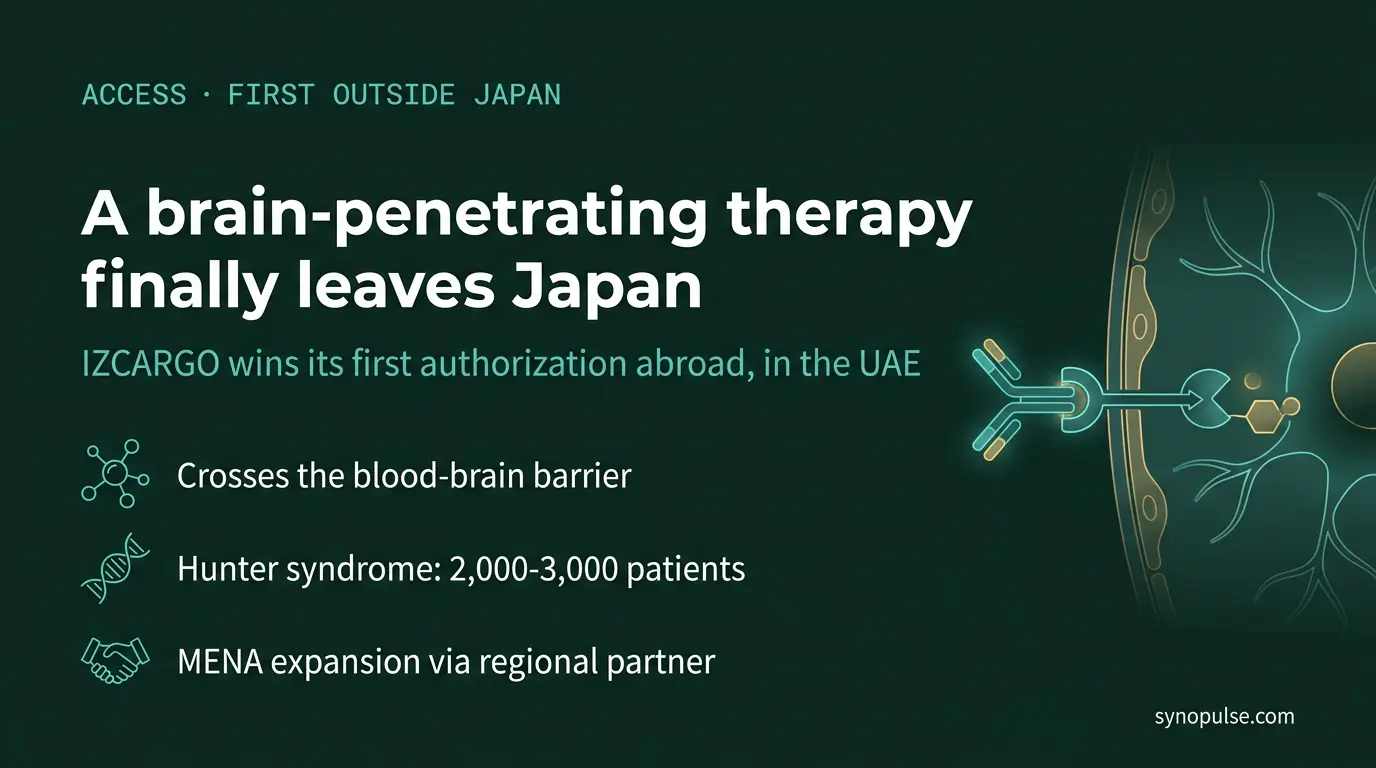
IZCARGO, a therapy engineered to cross the blood-brain barrier, won its first marketing authorization outside Japan five years after launching there.
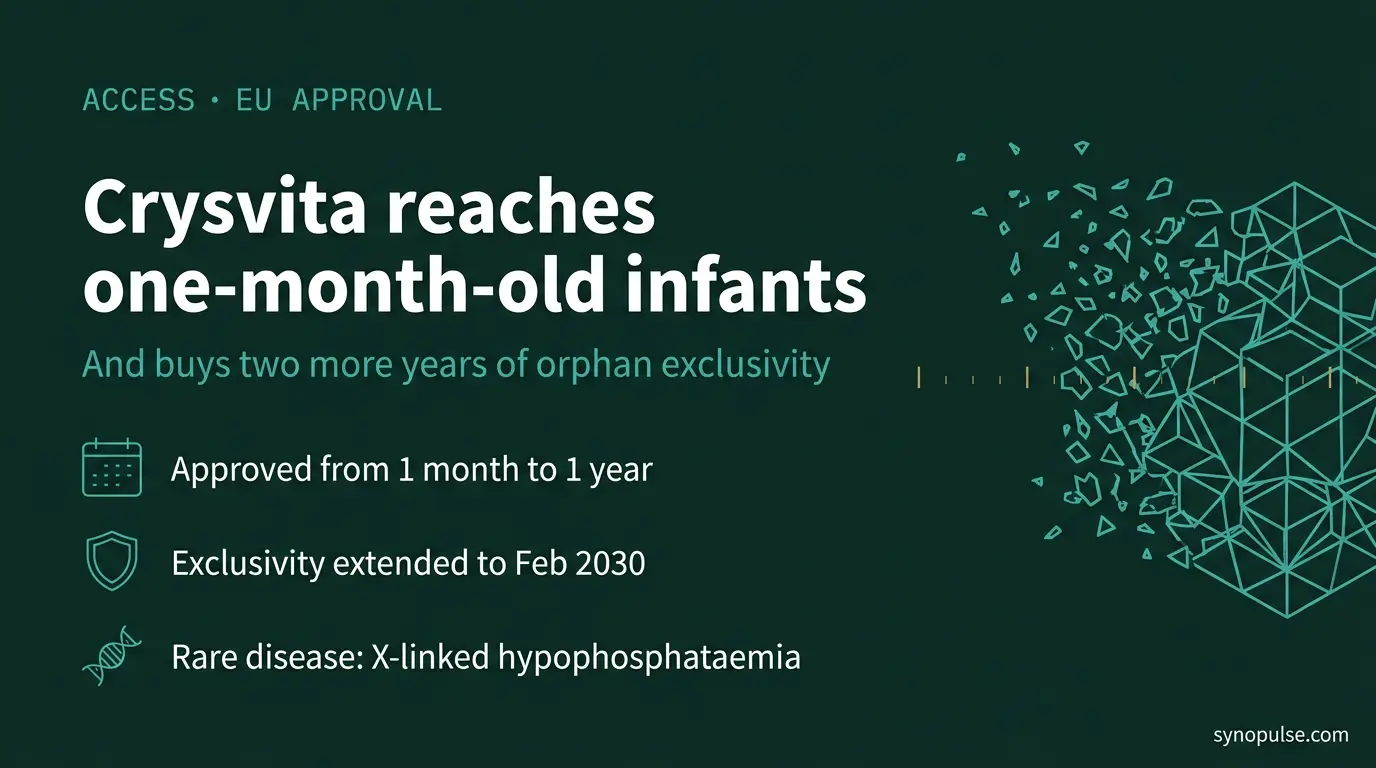
The European Commission approved Crysvita for infants as young as one month with XLH, a decision that also buys Kyowa Kirin two more years of orphan exclusivity.
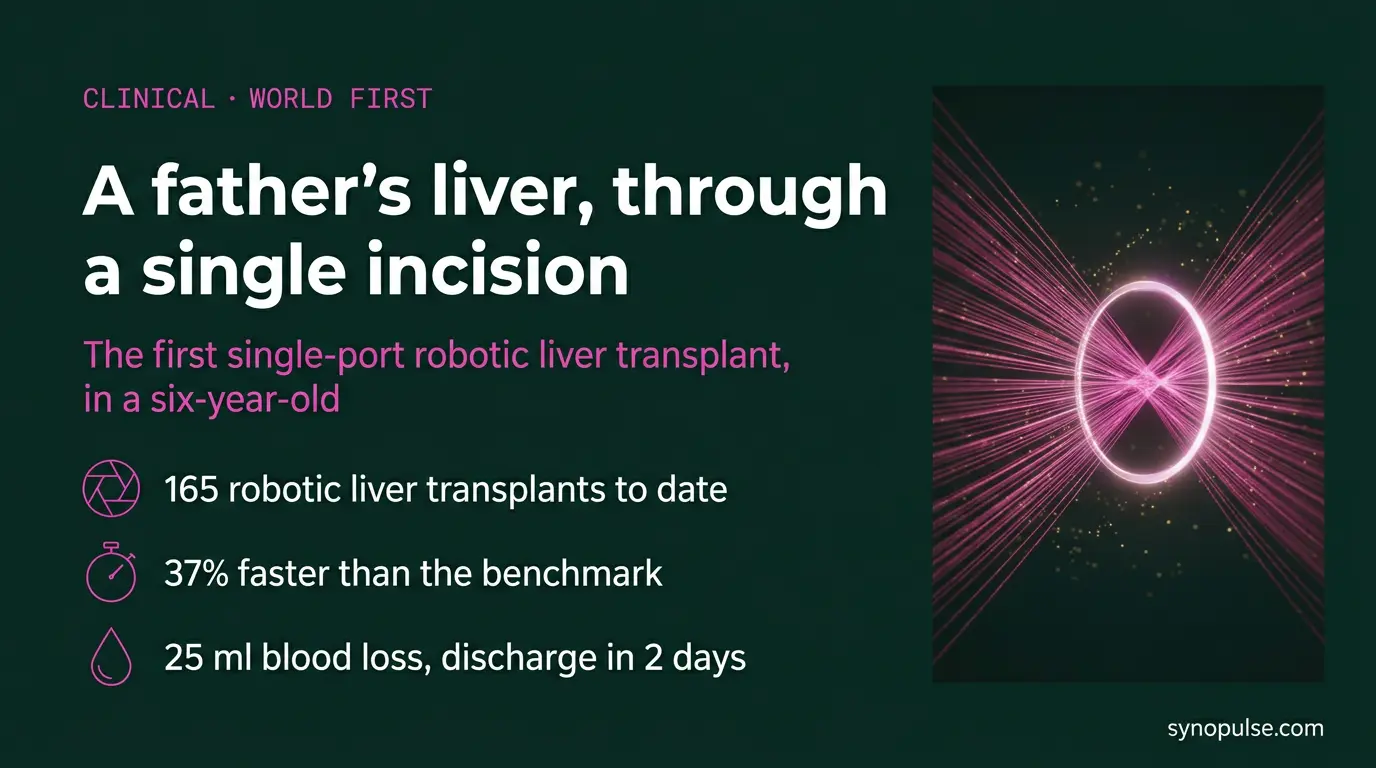
A six-year-old with a rare genetic liver disorder became the first patient to receive a liver transplant through a single robotic incision, donated by his father.