Canada Moved Two Cancer Drugs Forward in One Week. Neither Went the Normal Route.
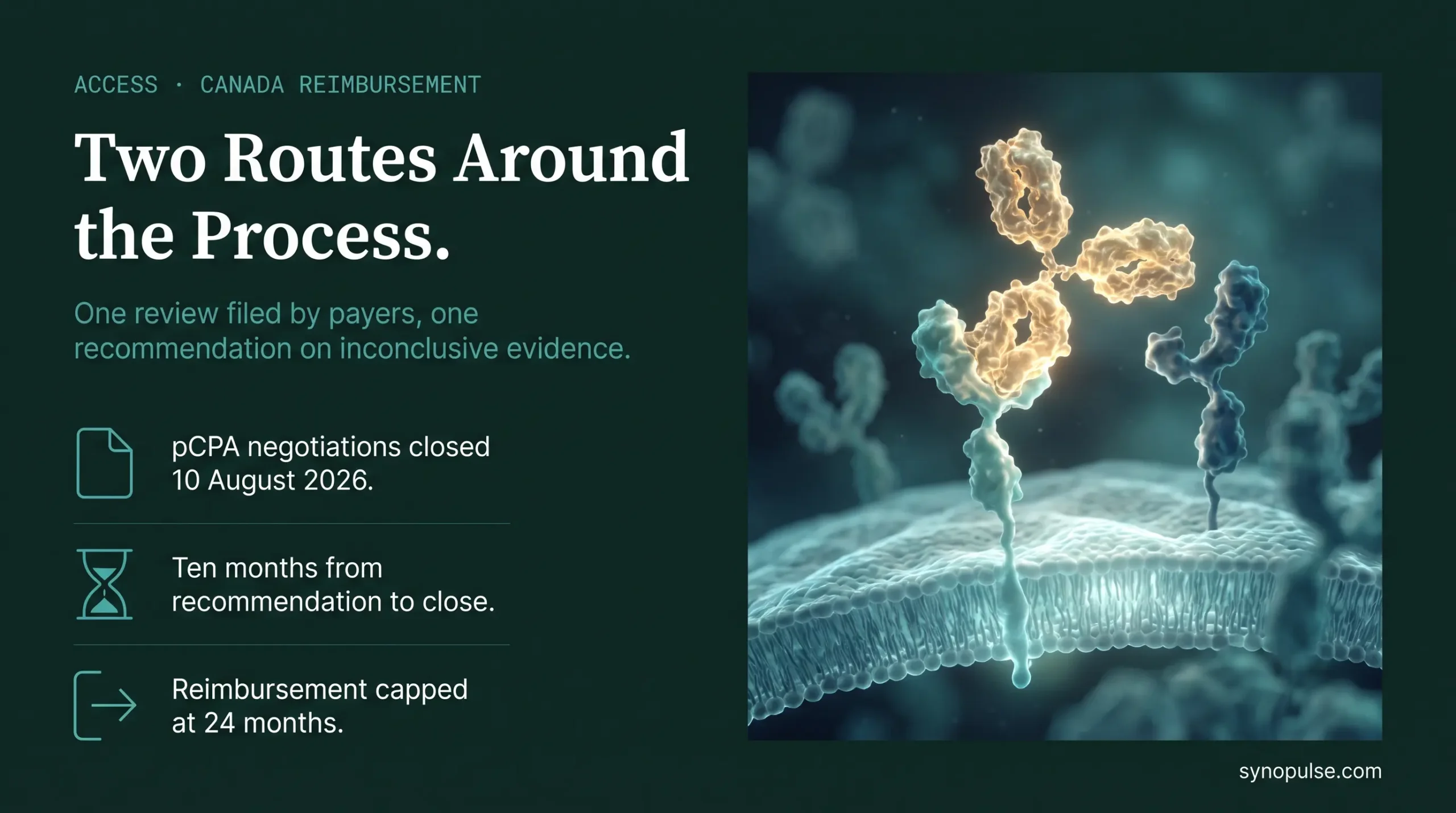
One drug reached review only because payers filed for a manufacturer that had not. The other was recommended on evidence the committee called inconclusive.

One drug reached review only because payers filed for a manufacturer that had not. The other was recommended on evidence the committee called inconclusive.
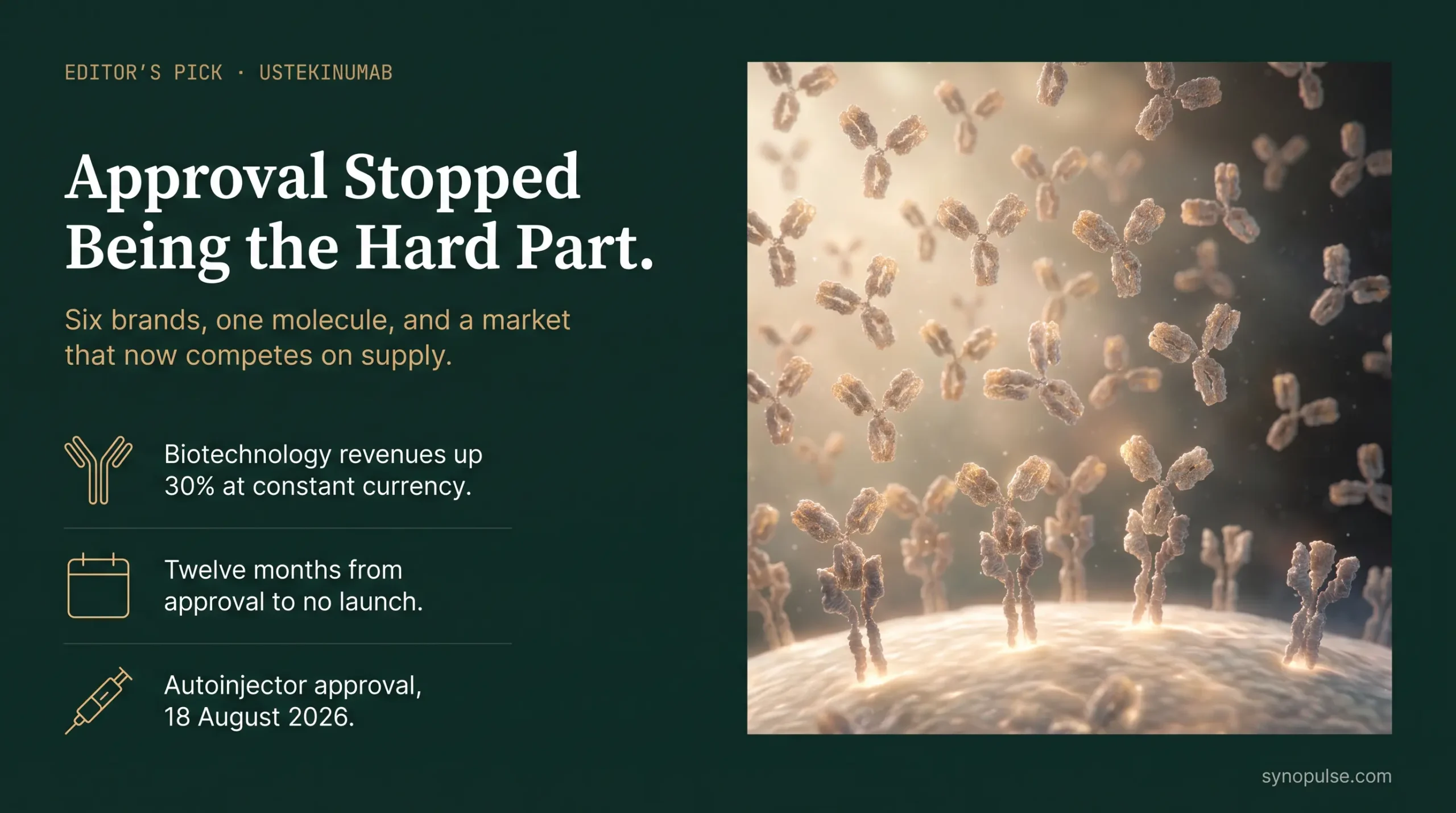
A biosimilar licence used to be the scarce asset. In ustekinumab it is the entry ticket, and the returns go to whoever solves supply and device.
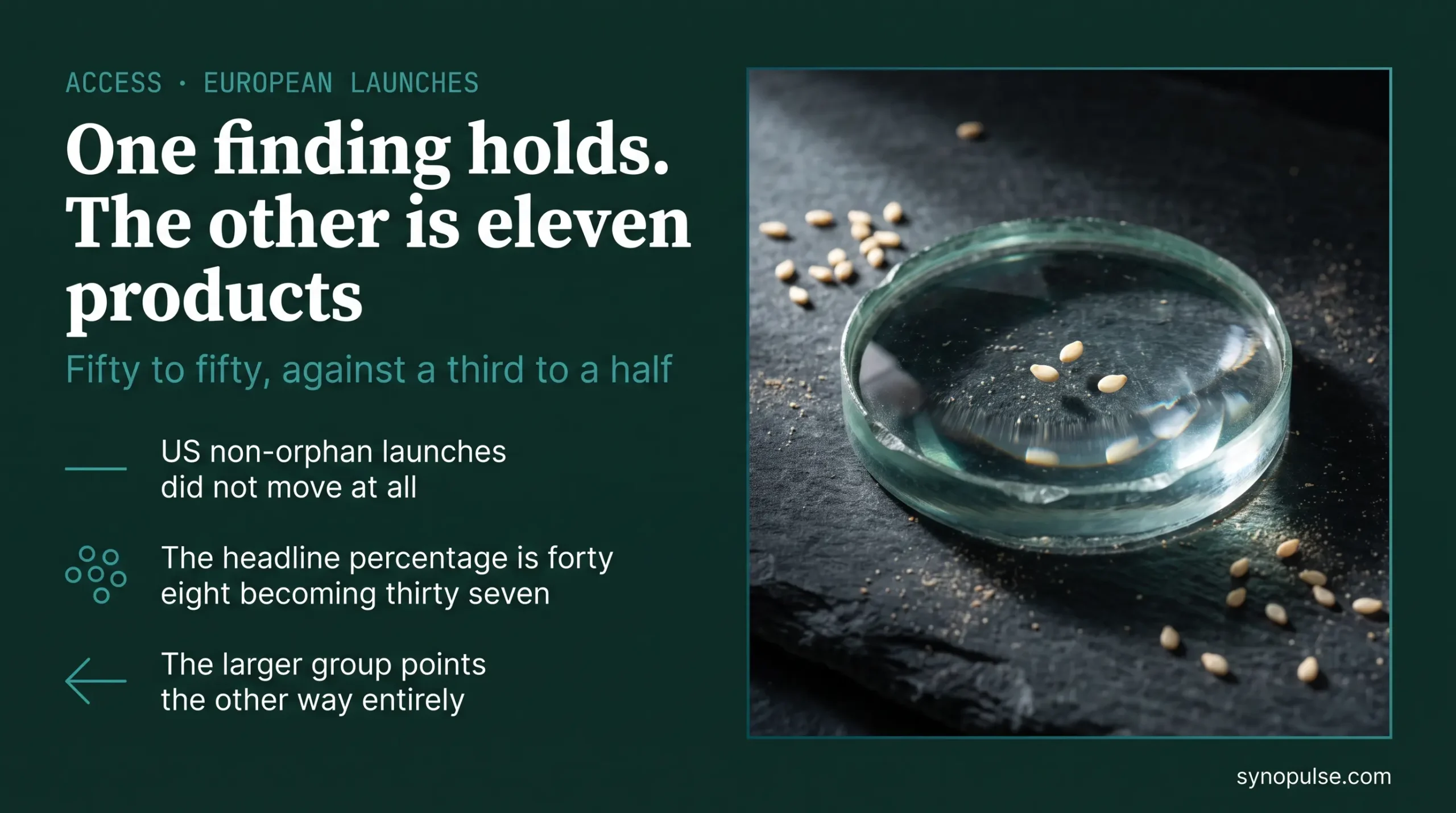
The 22.9% figure driving coverage of European launch delays is 48 products falling to 37. The pricing finding underneath it is stronger and barely quoted.
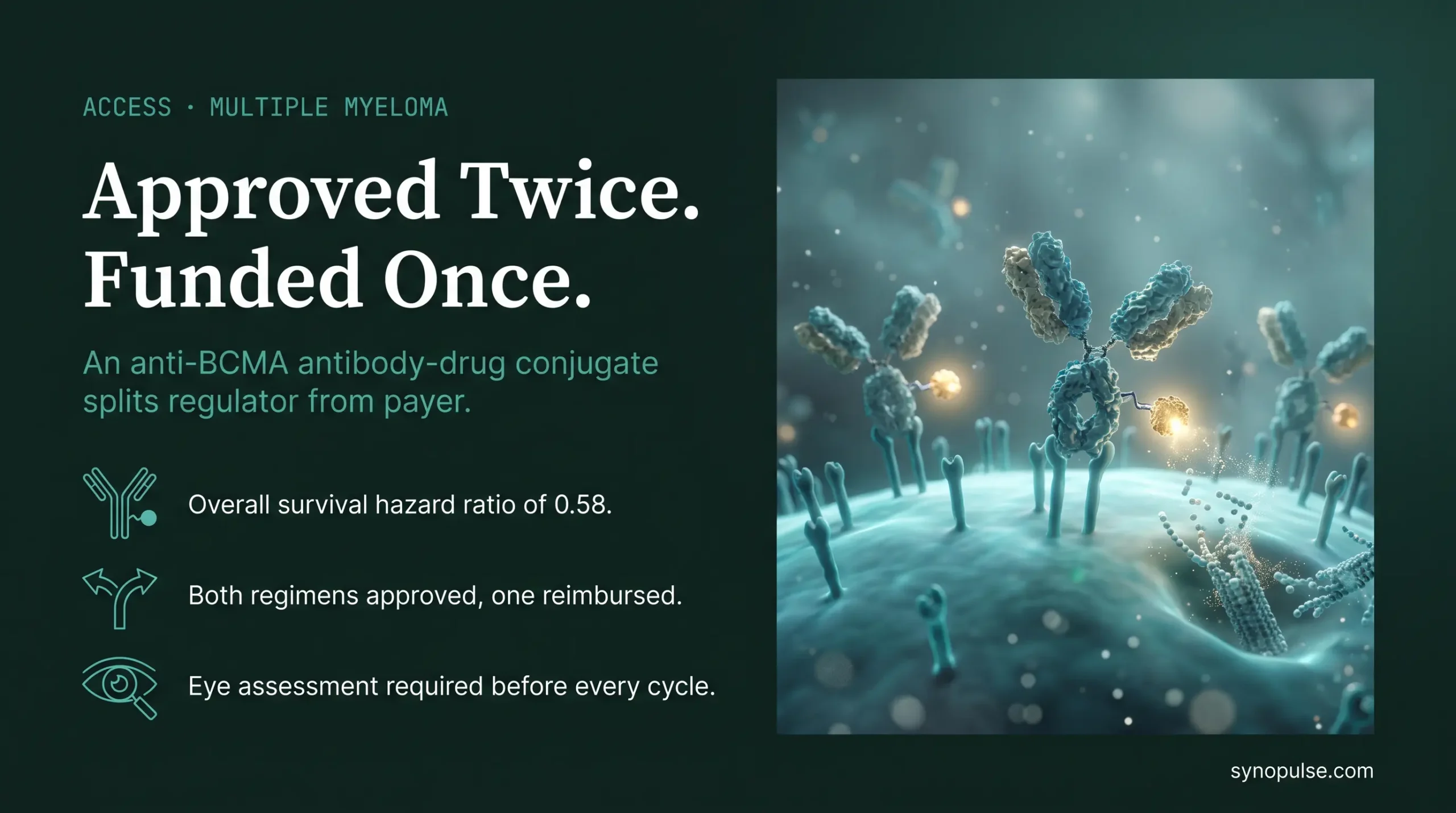
Same drug, same week, two Asian markets. The regulator approved on progression-free survival. The payer funded only the regimen with overall survival data.
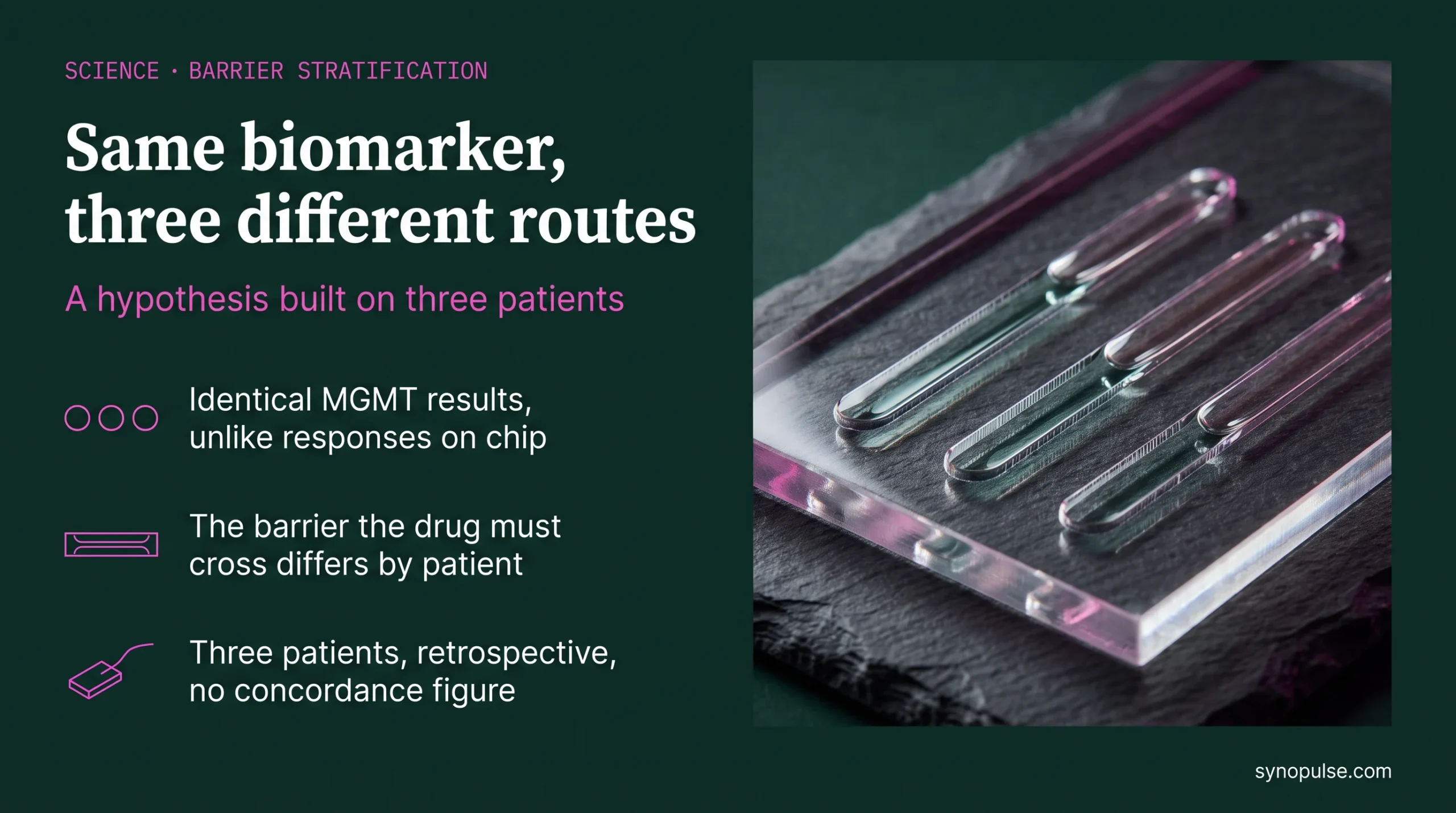
Three glioblastoma patients returned identical MGMT results and behaved differently on a barrier chip. The sample size is three, and the framing still matters.

Aletta matches human phlebotomists only when it agrees to attempt a draw. Narwhal cleared on bench and animal data, citing a trial with a different probe.
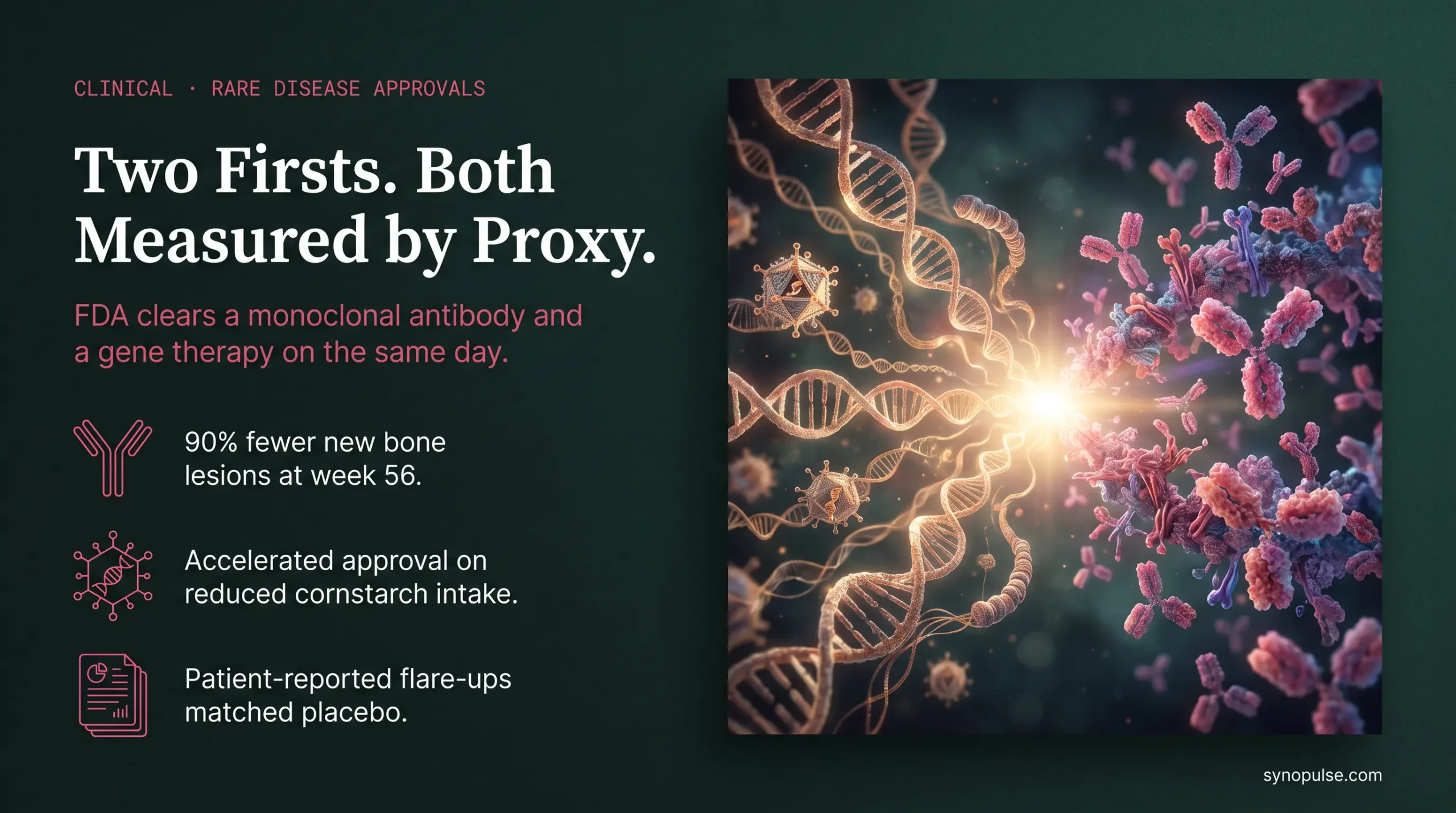
Pasatru’s flare benefit is clinician-assessed only. GENGLYCOS is indicated to reduce cornstarch intake. Two firsts, both measured a step from the patient.

Five mitochondrial drug classes named for CAR-T neurotoxicity, and the authors say none is under formal investigation. Every one is generic or preclinical.
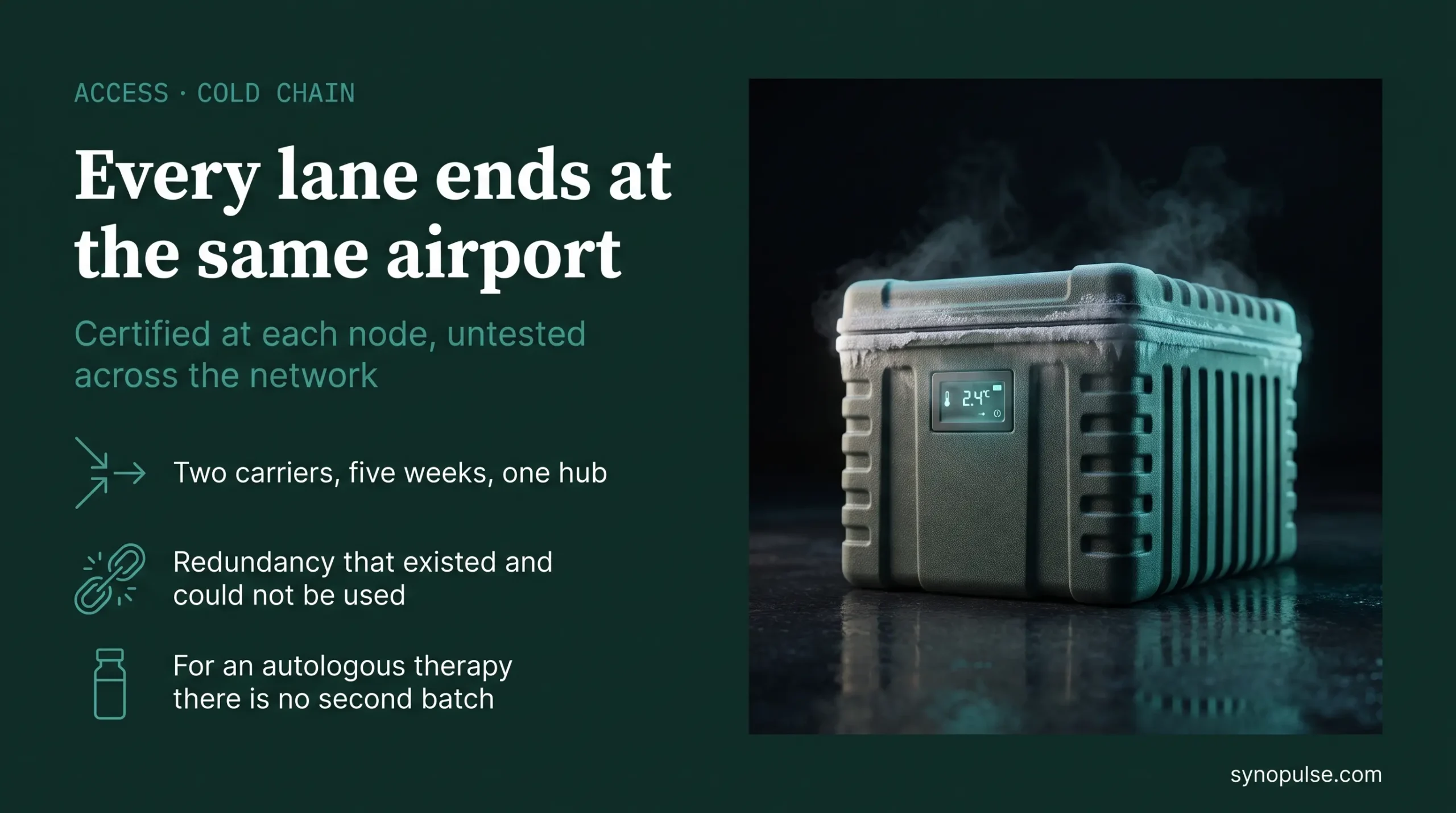
Two carriers built new pharma lanes in five weeks. Both end at Heathrow, an airport that lost a day to one transformer fire in March 2025.
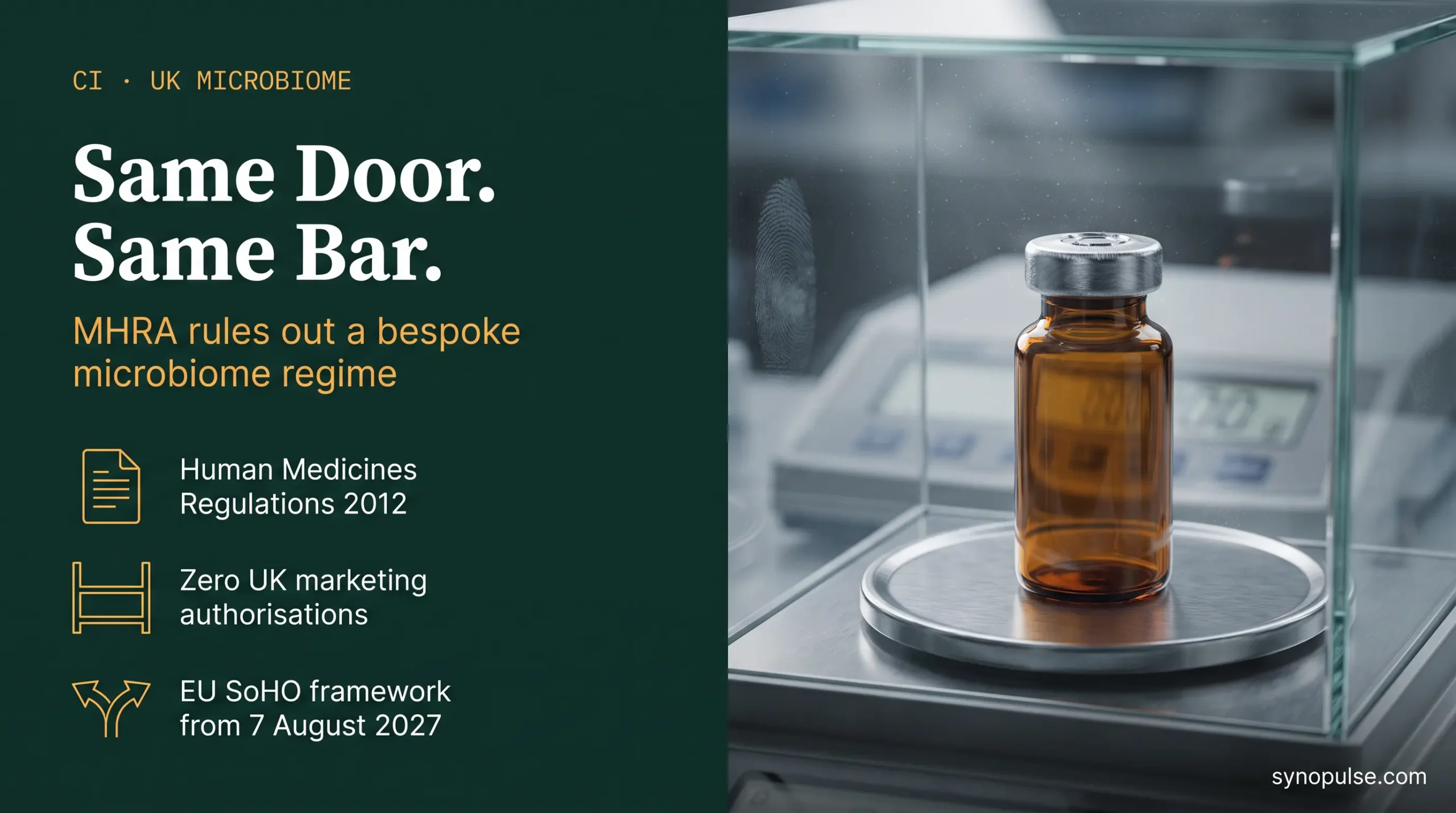
No bespoke regime is coming. Microbiome medicines meet the standard biological bar in the UK, while the EU builds a separate SoHO framework.