
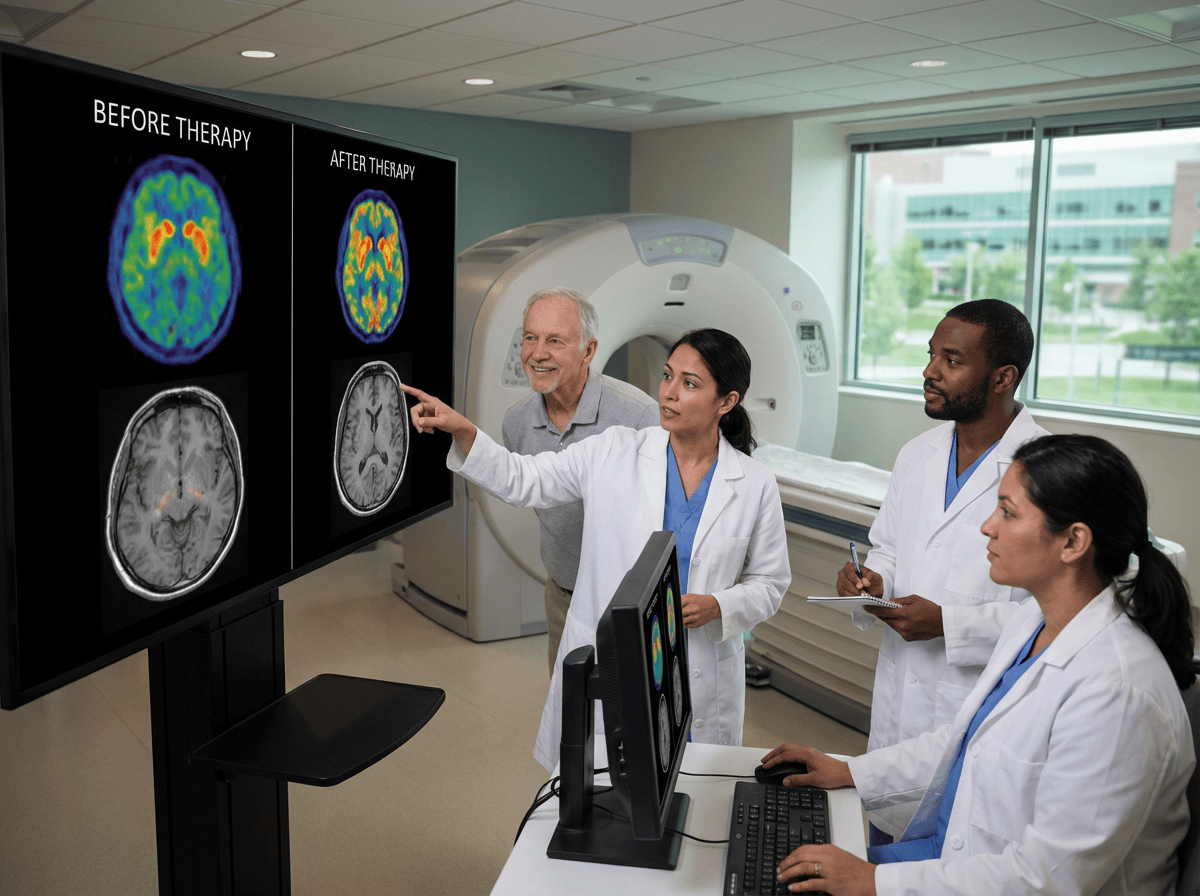
In this edition of Synopulse’s NeuroPulse, the neurology landscape showcases rapid momentum across regulatory action, payer alignment, clinical development, and medtech innovation. Major CMS reimbursement shifts are expanding access for neuromodulation and neuroimmune therapies, while pivotal trial advancements in ALS, SMA, Parkinson’s dysphagia, and gene therapy signal a decisive move toward earlier, more precise intervention. Coupled with next-generation imaging AI, robotic spine surgery breakthroughs, and emerging biomarker platforms for Alzheimer’s and Parkinson’s, underscores a field accelerating toward broader innovation and more personalized neurologic care.
Payers & Market Access: Expanding Coverage
LivaNova’s VNS Therapy Receives Major CMS Reimbursement Increases
CMS assigned VNS Therapy new patient implants to New Technology APC 1580 and elevated end-of-service procedures to Level 5 APC, boosting Medicare outpatient payments by ~48% and ~47% respectively. The shift materially improves hospital economics and removes key barriers to adoption for drug-resistant epilepsy patients.
SetPoint Medical Secures CMS Transitional Pass-Through Status for RA Neuroimmune Modulation Implant
CMS granted TPT status for the SetPoint System, creating a new HCPCS device category (C1607) and enabling incremental reimbursement for procedures starting Jan 2026. The designation supports broader rollout of the first FDA-approved neuroimmune modulation therapy for rheumatoid arthritis.
Green Lights – Regulatory & Access Go-Aheads
Novartis Wins FDA Approval for Itvisma, First SMA Gene Replacement Therapy for Adults
The FDA approved Itvisma for SMA patients aged ≥2 years through adulthood, marking the first gene replacement therapy available broadly beyond infants. Phase 3 data showed significant motor-function improvement and stabilization, offering a single-dose alternative to lifelong SMA treatments.
Eisai Completes FDA Submission for LEQEMBI IQLIK Starting-Dose Autoinjector
Eisai submitted the sBLA for a weekly 500 mg subcutaneous starting dose of LEQEMBI IQLIK, enabling at-home initiation instead of biweekly IV infusions. Data from Clarity AD OLE show SC dosing achieves equivalent exposure and similar safety, with <2% systemic reactions.
Clinical Trials: Outcomes, Setbacks & Early Advances
J&J’s Anti-Tau Antibody Posdinemab Fails Phase 2 Alzheimer’s Trial
A scheduled review found posdinemab did not slow clinical decline on the iADRS scale, prompting termination of the Auτonomy study. The failure adds to recent setbacks for tau-targeting strategies and raises questions about viability of monoclonal-tau therapeutics.
World’s First Robotic Minimally Invasive Bertolotti Resection Performed
VSI surgeon Dr. Christopher Good executed the first robotic-assisted minimally invasive resection for Bertolotti syndrome via a single 22-mm incision. Robotic trajectory planning enabled precision bone removal with reduced tissue disruption, blood loss, and recovery time.
Early Science: Novel Targets, Biomarkers, and Mechanistic Insights
Psyence BioMed Launches First Psilocybin Longevity Research Program
Psyence BioMed initiated the first publicly listed-company program exploring psilocybin’s effects on biological aging. Preclinical evidence shows psilocin extends cell lifespan >50% and modulates oxidative stress, telomeres, and neuroplasticity, positioning psychedelics as potential longevity agents.
MedTech Innovations: Neuroimaging, Robotics & AI
RapidAI Receives Five FDA Clearances Expanding Its Deep Clinical AI Platform
FDA clearance for five new imaging modules: Rapid DeltaFuse™, Rapid LMVO, Rapid MLS, Rapid OH, and Rapid Aortic for measurement. The clearances advance RapidAI as a comprehensive imaging-to-decision support platform integrated across PACS and mobile systems.
Johnson & Johnson Expands Neurovascular R&D Hub in Galway
J&J MedTech broadened its Galway R&D footprint to accelerate stroke innovations, liquid embolic technologies, and chronic subdural hematoma solutions. The expansion strengthens Ireland’s standing as a global neurovascular innovation hub.
Regenity Biosciences Wins 63rd FDA Clearance for Dural Repair Membrane
Regenity secured FDA 510(k) clearance for DuraMatrix Repair, a collagen-based resorbable membrane for neurosurgery. The product adds to Regenity’s strong regulatory track record and provides surgeons with a high-strength, conformable solution for dural closure.
Public Health Highlights
Kazakhstan’s ‘Autism: One World for All’ Program Wins AmCham Healthcare Award
The Bulat Utemuratov Foundation’s national autism program, spanning 13 centers and 17,000 children, earned AmCham’s Healthcare Award for expanding evidence-based therapy access and driving inclusive practices across the country, including airport and airline accessibility initiatives.
Deals, Grants & Capital: Backing the Future of Neurology
Cordance Medical Raises $8M Seed to Advance BBB-Opening Ultrasound Platform
Cordance closed an oversubscribed $8M seed round to support its first-in-human trial using noninvasive ultrasound for controlled blood–brain barrier opening. The platform aims to improve brain-cancer drug delivery with real-time monitoring and no head fixation requirements.
UT Health San Antonio Launches Phase 2 SwallowFIT Trial for Parkinson’s Dysphagia
A $1.9M DoD-funded multicentre Phase 2 study will evaluate a structured neuroplasticity-based swallowing therapy for early Parkinson’s patients. Pilot data showed improved swallowing, fewer choking episodes, and better confidence, prompting the larger controlled trial.
Pasithea Wins ALS Association Grant to Start PAS-004 ALS Trial
The ALS Association awarded ~$1M for the first ALS trial of PAS-004, a macrocyclic MEK inhibitor targeting MAPK/MEK pathways linked to TDP-43 aggregation and neuroinflammation. The Phase 1 study will evaluate safety, ALSFRS-R, and NfL biomarkers across 12 patients.
Enigma Biomedical Secures MJFF Grant for α-Synuclein PET Tracer Discovery
MJFF awarded Enigma $2M to develop a PET imaging biomarker for α-synuclein pathology, using click-chemistry platforms led by biomarker pioneer Dr. Hartmuth Kolb. A successful tracer could dramatically improve PD staging, diagnosis, and trial design.
For media inquiries or to share perspectives on access and evidence policy, email editor@synopulse.com.
