
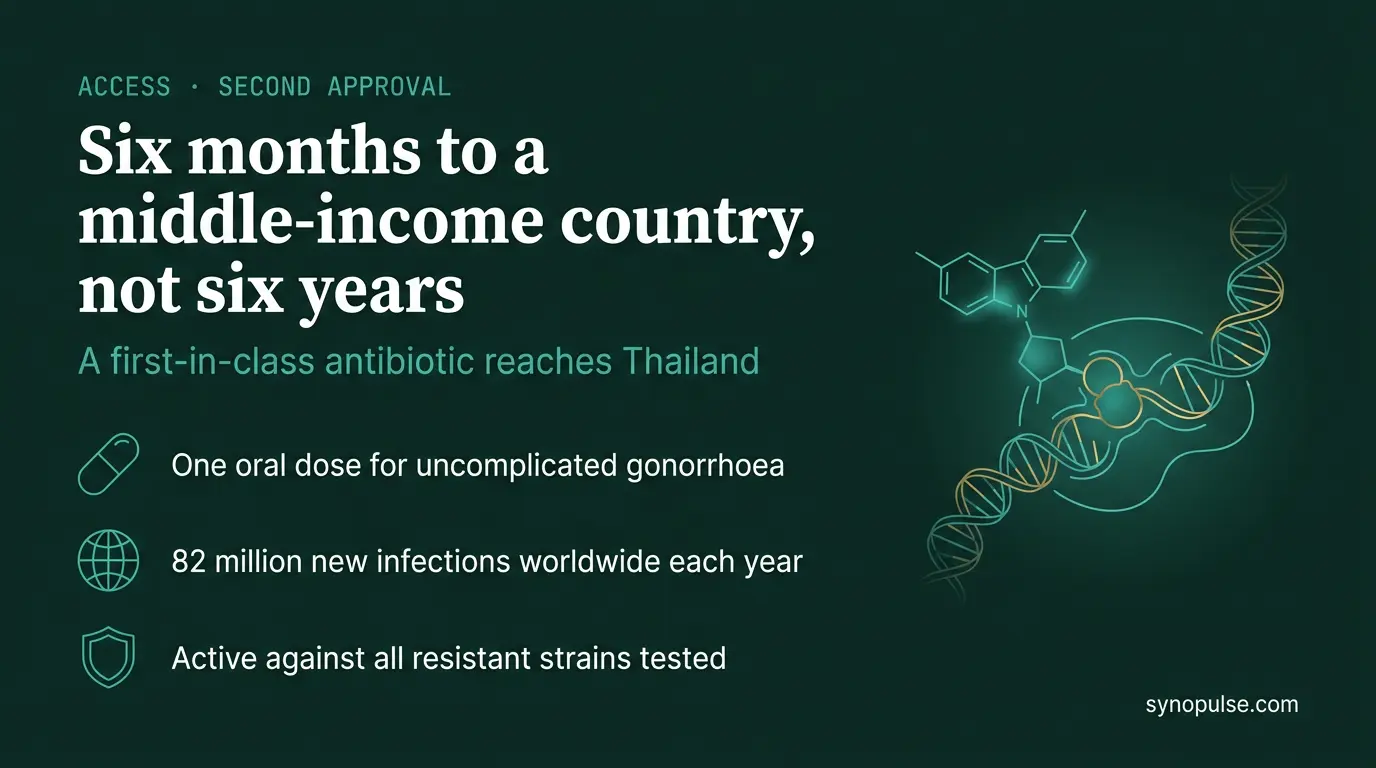
A New Antibiotic Reached a Middle-Income Country Six Months After the US, Not Six Years
- Thailand’s FDA approved NUZOLVENCE (zoliflodacin), a first-in-class, single-dose oral antibiotic for uncomplicated urogenital gonorrhoea, in adults and children aged 12 and over weighing at least 35kg.
- It arrives six months after US approval, making Thailand the second country worldwide to clear the new chemical entity. The priority-review submission was filed in November 2025 and led by Dr. Reddy’s Laboratories with support from GARDP.
- The Phase 3 trial was sponsored and led by GARDP, met its primary objective against the current standard of care, and was published in The Lancet on 11 December 2025. In vitro, zoliflodacin was active against all multidrug-resistant strains of N. gonorrhoeae tested, with no cross-resistance.
- More than 82 million new gonorrhoea infections occur globally each year, and resistance is eroding the existing options. South Africa is next in the registration queue.
Access read
The six months is the headline, but the rights structure underneath is what produced it. Zoliflodacin was developed through a public-private partnership in which the commercial holder, an Innoviva affiliate, keeps North America and the European Union, while GARDP holds the right to register and commercialise across more than three-quarters of the world’s countries, including every low-income country and most middle-income ones. That split is the answer to the problem that has emptied the antibiotic pipeline for two decades: a new antibiotic is worth developing only if someone can profit from it, and the places that need it most are the places least able to pay. Rather than asking one owner to reconcile those two facts, the model separates them, so the commercial party pursues the profitable markets and a non-profit pursues the rest without either subsidising the other. Note the funders too, the governments of Germany, the UK, Japan, the Netherlands, Switzerland and others, plus the European Commission. This drug exists because public money paid for it, and it reached Bangkok quickly because the licence was written to let it. New antibiotics have historically taken years to reach lower-income markets after a first high-income approval. This one took six months, and the reason is contractual as much as regulatory.