
NeuroPulse: Today’s Three Signals
The neurology and neurodegeneration landscape is converging around execution rather than exploration. Today’s signals show how late-stage regulatory precision, platform-driven RNA partnerships, and regulator-grade real-world evidence are reshaping the path from discovery to durable market access. Across ALS, Alzheimer’s disease, and RNA-based therapeutics, stakeholders are tightening alignment between data, infrastructure, and commercialization readiness.
Signal 1: CAMP4 and GSK Expand RNA Playbook Into Neurodegeneration
CAMP4 Therapeutics has entered a strategic research, collaboration, and license agreement with GSK to advance antisense oligonucleotide (ASO) therapies targeting neurodegenerative and renal diseases. The partnership leverages CAMP4’s proprietary RAP Platform®, which maps regulatory RNAs to selectively upregulate gene expression, an approach designed to address diseases driven by protein under-expression rather than toxic gain-of-function.
Under the agreement, CAMP4 will receive $17.5 million upfront, with eligibility for development and commercial milestones and tiered royalties, while GSK assumes responsibility for downstream development and commercialization. Strategically, the deal reinforces big pharma’s growing interest in RNA amplification strategies as a complement to gene replacement and gene silencing, particularly in neurodegeneration, where modest increases in functional protein may yield clinically meaningful benefit
Signal 2: CorestemChemon Aligns Regulatory Precision With Global ALS Commercialization
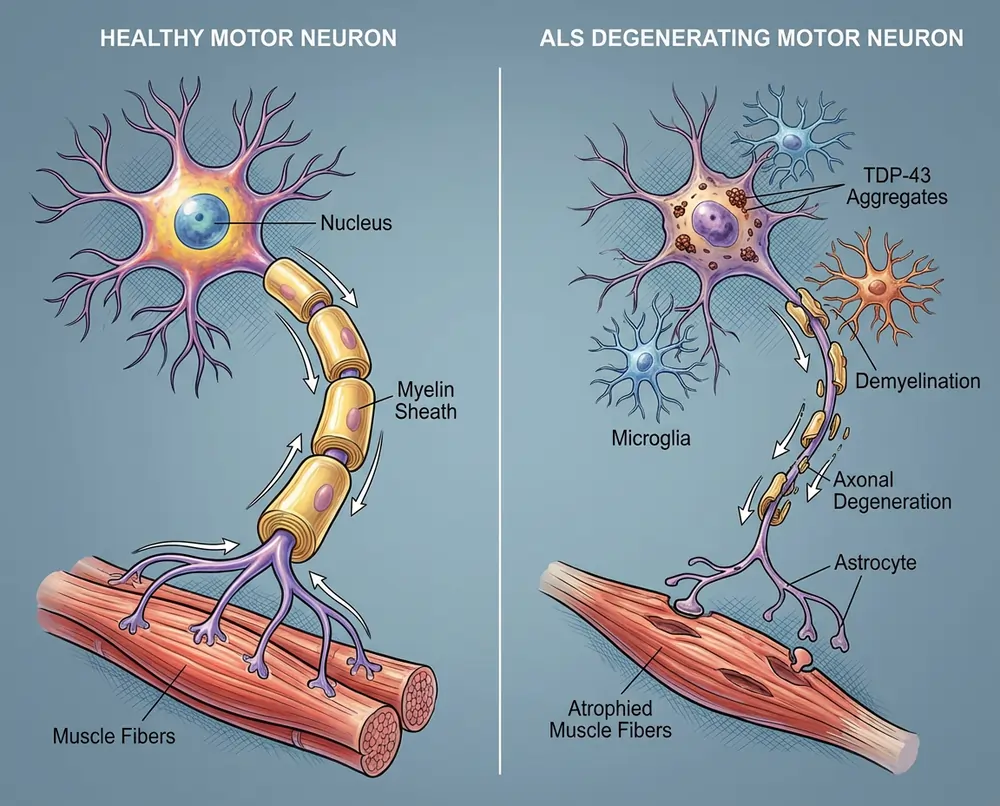
CorestemChemon is approaching a critical inflection point in the commercialization of its ALS stem cell therapy Neuronata-R, advancing a precision-focused regulatory strategy in Korea while simultaneously laying U.S. regulatory and manufacturing groundwork. In Korea, the therapy is undergoing an advanced MFDS product license modification review centered on a slow-progressor ALS subgroup, where post-hoc Phase 3 analyses demonstrated stabilization of ALSFRS-R scores, preserved respiratory function, and supportive neurofilament biomarker trends. A final regulatory decision is expected before the end of Q1 2026.
In parallel, the company has been selected into the NSF-backed Piedmont Triad Regenerative Medicine Innovation Engine, becoming the first Korean biotech to enter a U.S. NSF regenerative medicine ecosystem. CorestemChemon plans to relocate its U.S. subsidiary to North Carolina and target a Biologics License Application submission in Q3 2026. Execution is underwritten by KRW 26.1 billion in commercialization capital and reinforced by a KRW 1.7 billion open-market share purchase by the CEO, signaling management conviction at a late-stage regulatory moment.
Signal 3: Thermo Fisher Builds Regulatory-Grade Real-World Evidence Engine for Alzheimer’s
Thermo Fisher Scientific has enrolled the first patient in its PPD™ CorEvitas™ Alzheimer’s Disease Registry, an international, multi-country real-world evidence initiative designed to generate harmonized, regulator-grade longitudinal data on Alzheimer’s therapies. The registry will capture clinician-reported outcomes from routine practice, enabling assessment of long-term safety, treatment patterns, and real-world effectiveness across approved and emerging therapies.
Critically, the registry includes structured monitoring of MRI-based safety events, plaque clearance metrics, and cognition-linked outcomes, data increasingly scrutinized by regulators amid the expansion of disease-modifying Alzheimer’s treatments. As part of the broader CorEvitas clinical registry portfolio spanning more than 100,000 patients globally, the initiative strengthens Thermo Fisher’s role as a data infrastructure partner at the intersection of neurodegenerative drug development, post-authorization safety, and payer confidence