
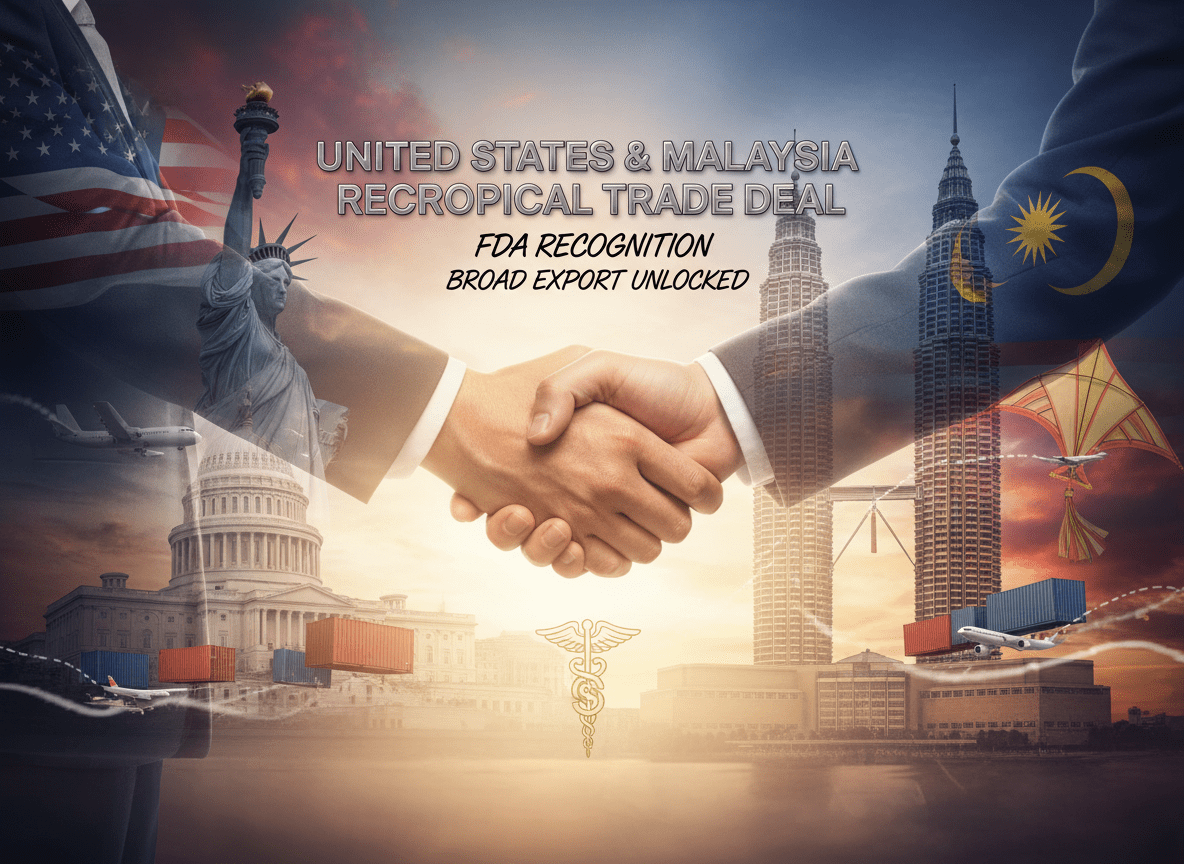
Reciprocal Trade Pact Between U.S. and Malaysia Unlocks FDA Recognition, Market Entry for U.S. Pharma
The United States and Malaysia have formalised a legally binding Agreement on Reciprocal Trade, marking a significant expansion of the bilateral commercial relationship and offering new pathways for U.S. exporters across goods, services and high-tech sectors.
A standout provision allows Malaysia to recognise U.S. Food & Drug Administration (FDA) certificates and prior U.S. marketing authorisations for pharmaceuticals and medical devices. This development is especially meaningful for American life-science firms aiming to enter the Malaysian market, as it may reduce redundant regulatory reviews and accelerate product launches.
Yet there’s a flip side. Local Malaysian manufacturers will face stiffer competition as the doors widen for U.S. exports at the same time, Malaysia is pushing ahead with drug-price regulation and tougher procurement negotiations, which will squeeze margins and demand operational efficiency.
What You Need To Know
- Malaysia will accept U.S. FDA certificates and prior marketing authorisations for pharmaceuticals and medical devices, streamlining market entry.
- Tariff commitments: Malaysia pledges preferential access for U.S. goods across a wide range of sectors; the U.S. will maintain a 19% reciprocal tariff for most Malaysian imports unless zero-rated.
- Non-tariff barrier reductions: Malaysia agrees to accept U.S. vehicle safety and emissions standards, streamline import licences for key industrial products, and lift trade restrictions on remanufactured goods.
- Digital trade & investment: Malaysia commits to a moratorium on customs duties on electronic transmissions, data transfer protections for U.S. firms, and stronger IP, labour and environmental safeguards.
On tariffs, Malaysia commits to giving U.S. goods preferential market access across diverse sectors chemicals, machinery, electrical equipment, dairy, poultry, and more. Meanwhile, the U.S. will uphold reciprocal trade provisions for Malaysian imports, with opportunities for preferential or duty-free access on specific product categories.
Non-tariff barriers also come under focus. Malaysia has pledged to accept U.S. safety and emissions standards for vehicles, streamline licences for steel and pipe imports, and lift restrictions on remanufactured goods. These steps are expected to reduce friction and open up previously constrained export channels.
The digital economy and supply chain resilience are another major front. Malaysia agrees to keep duties off electronic transmissions, protect cross-border data transfers for U.S. platforms, and strengthen intellectual property enforcement and labour standards. The deal also includes commitments on rare earths and critical-minerals exports to the U.S., reflecting strategic alignment in supply chain and national-security domains.
For U.S. exporters especially in pharmaceuticals, medical devices, and high-technology manufacturing this agreement offers a more predictable and efficient path into Southeast Asia’s growing markets. The framework signals openness to foreign innovation and investment paired with commitments to deepen regulatory alignment with global partners.
However, local industry dynamics may shift. Malaysian manufacturers and regulators will face heightened competition from U.S. entrants now enabled by simpler access, while the government simultaneously tightens labour, environmental and state-enterprise oversight.
In sum, the U.S.–Malaysia trade agreement sets ambitious terms. By recognising U.S. regulatory approvals, slashing barriers, and aligning on digital and supply-chain fronts, both countries position themselves for deeper economic integration. For American life-science companies seeking Southeast Asia entry, the deal opens meaningful doors or quality concerns emerge. For patients, that could translate into earlier access to advanced treatments; for regulators and companies, it means shifting the focus from repeat assessments to post-market oversight.
Related Content
UK Government Unlocks Game-Changing Drug Pricing Strategy
The timing is also strategic: Malaysia is partnering with the U.S. to bolster its standing as a regional hub for high-quality, export-ready pharmaceuticals. The agreement enhances Malaysia’s role in the global supply chain while inviting more global pharma firms to bring their innovations into the region under simpler regulatory terms.
All told, the U.S.–Malaysia Reciprocal Trade Agreement could profoundly reshape the competitive landscape of Southeast Asia’s pharma market, as global exporters gain momentum, regional manufacturers adapt, and patients benefit from faster access to FDA-approved therapies.