
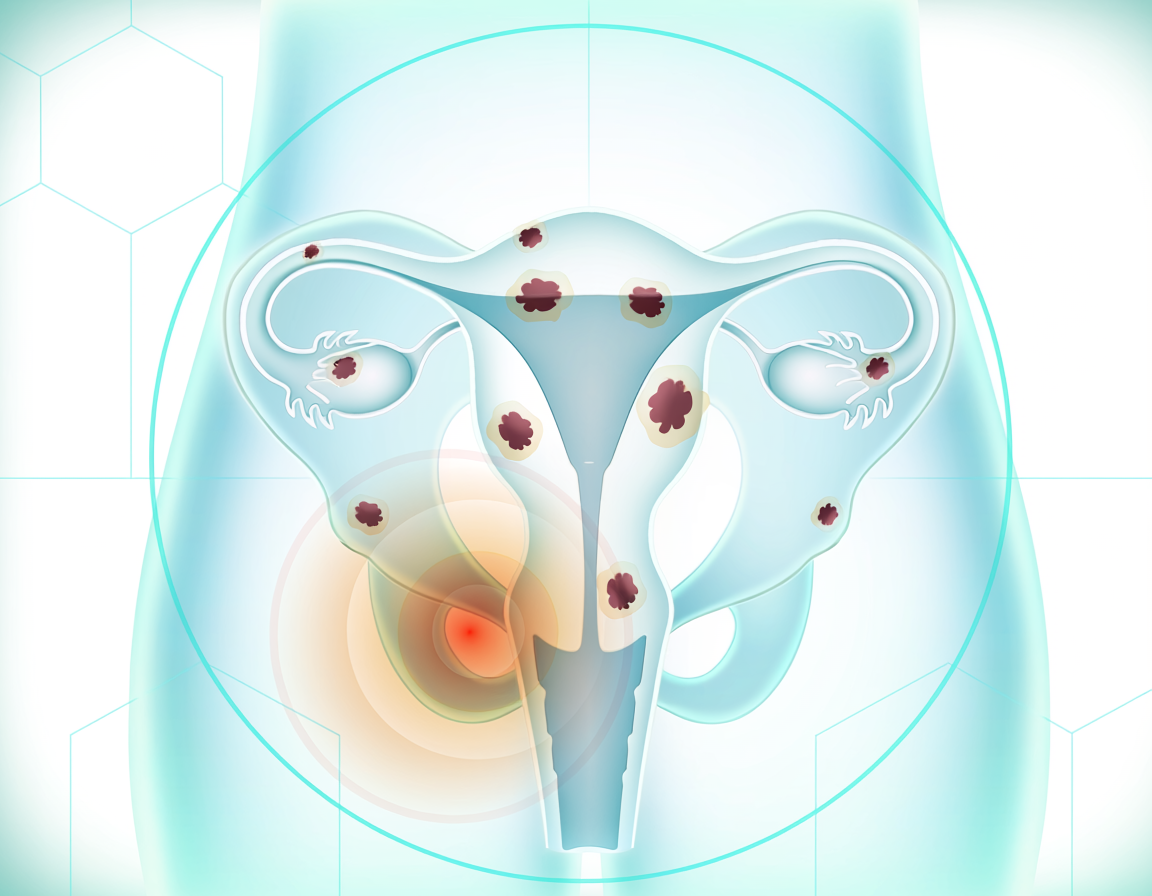
Women in the UK wait more than nine years, on average, to be told they have endometriosis. A new pair of tests could start to close that gap and do it without surgery.
On 7 July, the National Institute for Health and Care Excellence (NICE) published draft guidance recommending that two non-invasive diagnostic tests, Endotest and EndoSure, be made available on the NHS while the companies behind them gather more evidence. The aim is to give GPs and other primary care staff a faster, gentler way to work out whether a woman’s symptoms point to endometriosis, instead of leaving her stuck in a referral queue for years.
The scale of the problem is hard to overstate. Endometriosis affects roughly 1 in 10 women of reproductive age in the UK, and the average wait for a diagnosis runs to nine years and four months. For women from ethnically diverse communities, NICE says that figure climbs to around 11 years. A survey of more than 10,000 women by the All-Party Parliamentary Group on endometriosis found that over half had seen their GP more than 10 times before getting an answer, and over half had ended up in an emergency department because of their symptoms.
Those delays aren’t just frustrating, and they carry a real cost. Patients and doctors describe years of avoidable suffering and worsening health, and endometriosis that’s left to progress can become harder to treat.
Part of the reason diagnosis takes so long is that the current tools are limited. Transvaginal ultrasound leans heavily on the skill of whoever is operating it, referral pathways can be slow, and gynaecology waiting lists are long. The only way to confirm the disease for certain is a diagnostic laparoscopy, keyhole surgery under general anaesthetic, where a surgeon passes a camera through a small cut in the abdomen to look for it directly. It works, but it’s invasive, expensive and carries the usual surgical risks.
The two new tests take very different routes to the same question.
Endotest uses a saliva sample. It’s collected and sent to a lab, which looks for microRNAs, tiny biological markers that can signal whether endometriosis is likely present. The result goes back to the clinician to help guide the next steps.
EndoSure skips the lab entirely. It measures electrical signals in the gut using sensor pads placed on the abdomen. The patient fasts for six to eight hours, then drinks water until full during the 45-minute test so the device can read gut activity accurately. Results are ready as soon as it finishes.
A third technology, DotEndo, was assessed too, but NICE decided it needs more research before the NHS should fund early use of it.
None of this makes the tests a magic bullet, and NICE is careful to say so. Neither is a standalone diagnosis, and neither replaces clinical judgement. NICE recommends them only for women in whom endometriosis is still suspected despite a normal examination and imaging that came back negative, inconclusive, or wasn’t suitable in the first place. They’re meant to sit alongside standard practice, used by a healthcare professional, to support decisions about referral and management.
For the women who’ve lived through the wait, the appeal is obvious. Ami Robertson, a 23-year-old Pilates instructor from Glasgow, had symptoms from the age of 16 but was repeatedly told she had irritable bowel syndrome; a non-invasive test finally confirmed her endometriosis and got her into treatment for the first time. “No one should have to wait years to be believed,” she said.
Fifteen-year-old Simran Chavda from Huddersfield had a similar experience: severe pelvic pain from the age of 13, repeated GP visits and A&E trips that led nowhere, and a growing fear that the pain was somehow in her head. Her mother, Sharan Uppal, is herself a GP, and describes hitting roadblocks at every turn until a strongly positive test gave her the leverage to push for a referral and, eventually, a diagnosis of widespread endometriosis. Simran has since had surgery and says she’s starting to feel better.
Clinicians see a wider benefit. Dr Gail Busby, a consultant gynaecologist in Manchester, makes the point that catching the disease earlier and without surgery doesn’t only help the individual patient; it frees up appointments and surgical slots for everyone else in the queue. Emma Cox, chief executive of Endometriosis UK, welcomed the move but stressed that the tests only pay off if GPs and practice nurses are trained to recognise the symptoms and use them well.
Related news
NICE backs digital asthma tools for NHS use as evidence builds
NICE is treating this as a use-it-while-we-prove-it arrangement. Over a three-year window, the tests will be paid for through core NHS funding while the companies run the studies needed to confirm how well they perform, and NICE will check on progress each year. Early economic modelling suggests both could turn out to be cost-effective. The guidance is also still only a draft NICE is taking comments until 27 July, with a second committee meeting set for 12 August, and the recommendations could change.