
CMS Sets SAINT Payment Stability, Increases RNS System Reimbursement
The Centers for Medicare & Medicaid Services (CMS) has issued two major 2026 reimbursement updates impacting neuromodulation companies working in depression and epilepsy. While unrelated from a clinical or product standpoint, both decisions land within the same Medicare rulemaking cycle and reflect CMS’s growing willingness to support innovative brain-health technologies that demonstrate meaningful patient benefit. The final rules provide clear payment continuity for Magnus Medical’s SAINT therapy and substantial hospital and physician reimbursement increases for NeuroPace’s RNS System beginning January 1, 2026.
CMS Preserves 2026 Payment Structure for Magnus Medical’s SAINT Therapy
CMS finalized its 2026 Hospital Outpatient Prospective Payment System (OPPS) rule with an important outcome for Magnus Medical: reimbursement for the company’s SAINT neuromodulation therapy will remain unchanged next year. For hospitals and clinicians delivering SAINT which is marketed as the first and only FDA-cleared rapid-remission treatment for major depressive disorder the ruling provides a full year of payment stability and ensures that Medicare beneficiaries can continue to access the therapy in hospital outpatient settings.
Magnus Medical said CMS’ decision was influenced in part by strong comments submitted during the rulemaking period by clinicians, health systems and patient advocates. Company CEO Christian Gormsen described the outcome as a reaffirmation of CMS’s commitment to ensuring that patients with severe, chronic depression maintain access to a therapy capable of delivering rapid remission where other treatments have failed. Co-founder and CSO Brandon Bentzley said clinicians nationwide have embraced SAINT because of its ability to achieve fast and durable relief in patients who have exhausted conventional therapies.
In the final rule, CMS confirmed that SAINT will retain its existing Category III CPT codes (0889T–0892T) and current Ambulatory Payment Classification assignments. Magnus said the ruling allows its hospital partners to continue expanding access to SAINT, supported by the same reimbursement structure that has guided adoption to date.
SAINT was designated an FDA Breakthrough Device and is the first mental-health therapy to receive CMS innovation funding support through the NTAP and New Technology APC programs. Clinical data show that 79% of patients achieved remission in an average of 2.6 days, positioning the therapy as a unique noninvasive treatment option for major depressive disorder and treatment-resistant depression.
NeuroPace Gains Major Increases to RNS System Physician and Hospital Payments
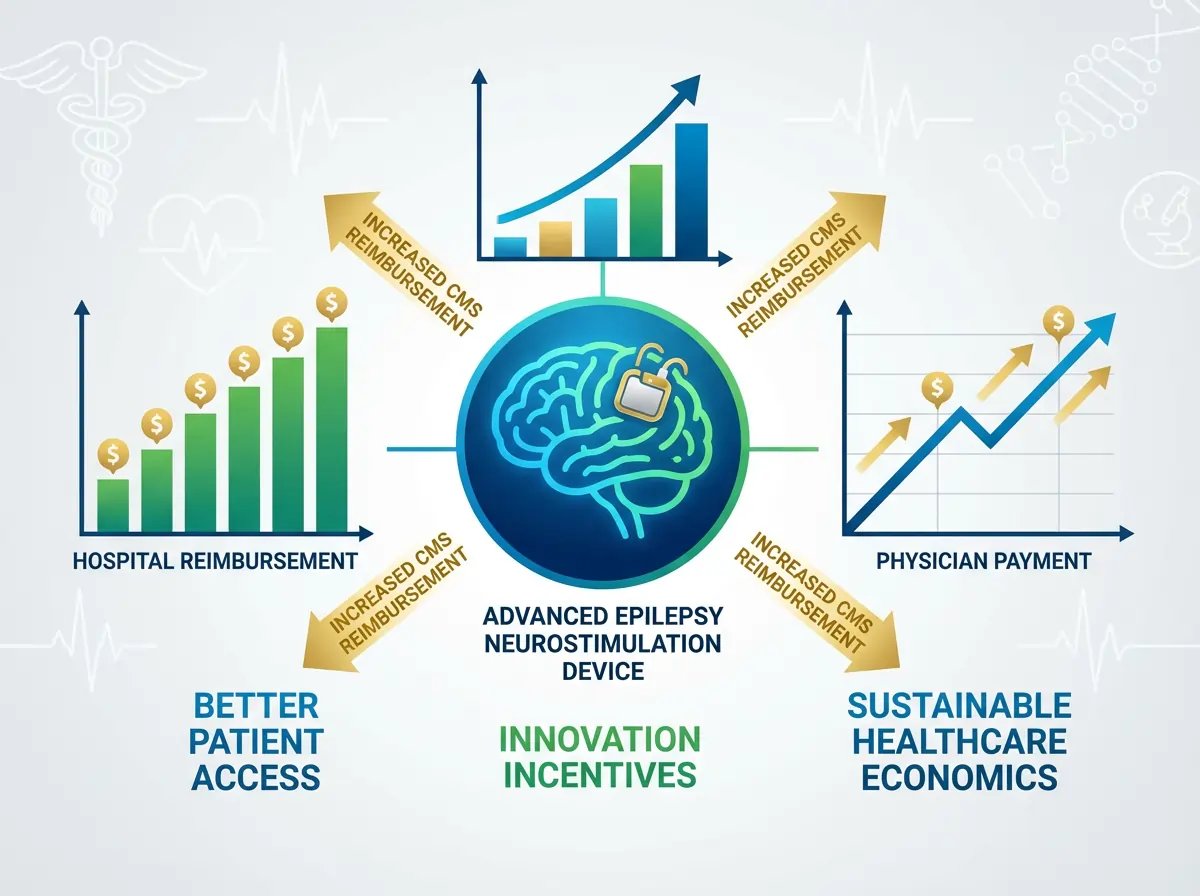
In a separate decision released the same day, CMS delivered a favourable outcome for NeuroPace in both the 2026 Medicare Physician Fee Schedule (PFS) and 2026 OPPS final rules. The updates raise reimbursement rates for neurosurgeons performing implantation and replacement procedures for NeuroPace’s RNS System, the first commercial brain-responsive neurostimulator for drug-resistant epilepsy.
Under the PFS final rule, CMS will increase professional payment by approximately 43% for the initial RNS implant procedure and 45% for the replacement procedure beginning January 1, 2026. NeuroPace CEO Joel Becker said the increases more accurately reflect physician time, resources and clinical complexity and should support continued surgeon adoption and growth in procedure volumes.
CMS also revised hospital outpatient payments for RNS replacement surgeries by moving CPT code 61891 from APC 5464 (Level 4 Neurostimulator Procedures) to APC 5465 (Level 5). The change increases the average reimbursement from $21,444 in 2025 to $31,526 in 2026, a year-over-year jump of 47%. Becker noted that replacement procedures are becoming an increasingly significant portion of the company’s business, making the updated APC assignment a meaningful tailwind for both patient access and commercial performance.
NeuroPace frames the RNS System as a personalized, real-time neuromodulation platform that treats seizures at their source. The company expects the revised rates to support neurosurgeons and hospitals that treat patients with drug-resistant epilepsy, helping sustain outpatient access as more patients progress to long-term device maintenance.
CMS Sends a Broader Market Signal on Neuromodulation
While the SAINT and RNS therapies address unrelated disorders, both CMS decisions deliver the same underlying signal: the agency is increasingly willing to update payment structures to support device-based neuromodulation when clinical value is demonstrated and stakeholder comments articulate patient need.
Related news
For companies developing neurotechnology across psychiatry, epilepsy and other neurological conditions, the 2026 rules suggest growing alignment between clinical innovation and reimbursement policy, an essential factor in long-term adoption, provider confidence and hospital investment.