
A Third Centiloid Scale Just Cleared. The First Two Already Disagree at the Threshold.
- The FDA cleared NeuroQuant PET under 510(k) K261916, Cortechs.ai announced on 18 August 2026. The software returns atlas-based regional quantification, SUVRs, and Centiloid values from amyloid PET, with PACS-ready output across PET-CT, PET-MR, and PET-only workflows.
- Centiloid quantification is named for three amyloid tracers: flutemetamol, florbetaben, and florbetapir. Cortechs markets five NeuroQuant PET tracer reports, including flortaucipir for tau and an FDG report. Whether tau and FDG sit inside K261916 is unstated.
- Cortechs is the third vendor into clinical Centiloid scoring, not the first. MIM Software‘s MIMneuro and Siemens Healthineers‘ syngo.PET Cortical Analysis both cleared Centiloid analysis in 2024. Both normalise on PET images alone, and the announcement does not say which method NeuroQuant PET uses.
- The product was described as FDA-pending at ASNR in May 2026, and the product page still marks it research use only as of writing. FDA’s 510(k) database returned no record for K261916, and the openFDA clearance dataset was last refreshed 3 August 2026.
CI read
Three companies now sell a scale built to make amyloid burden comparable across tracers and scanners. Published work says the scales are not comparable to each other. A third cleared calibration adds a variable to amyloid reporting rather than removing one.
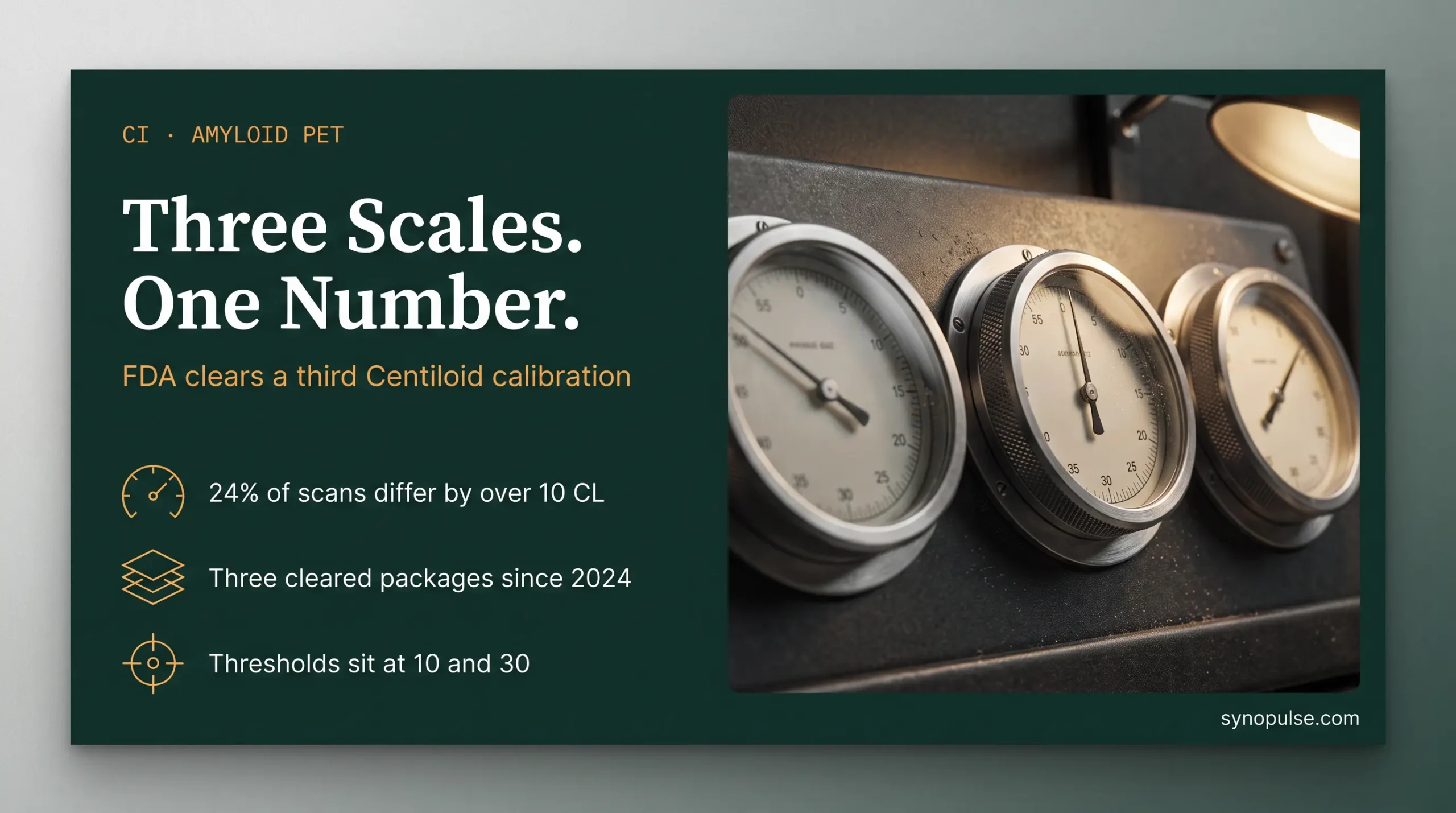
- The standardisation claim is undercut by the standard’s own data. Across 252 florbetapir scans, Centiloid scores from the two cleared packages differed by more than 10 Centiloids in 24% of cases. AMYPAD places negativity below 10 and positivity above 30, so that spread can move a borderline patient across the anti-amyloid eligibility line.
- Normalisation is the differentiator Cortechs has not claimed. Both incumbents normalise on PET images alone. Against an MRI-based research pipeline, MIMneuro diverged by more than 10 Centiloids in 29% of cases. NeuroQuant’s MRI segmentation heritage is the one axis on which Cortechs could credibly claim to sit closer to the research standard.
- Demand the head-to-head before the protocol conversation. A 510(k) establishes substantial equivalence to a predicate, not agreement with the scales already running in clinic. Watch for a Cortechs comparison against MIMneuro and syngo.PET, and for whether tau quantification, which Siemens already holds, follows in a separate submission.