
Australia Cannot Settle Its Device Price Fight While the Service Sits Inside the Price
- The final independent evaluation of Australia’s Prescribed List reforms, commissioned by the Department of Health and completed by Nous Group in June 2026, found the reforms generated an estimated $540 million in health system savings across the three years to June 2025, including $239 million in 2024-25, with cumulative savings projected to reach $1 billion by June 2027.
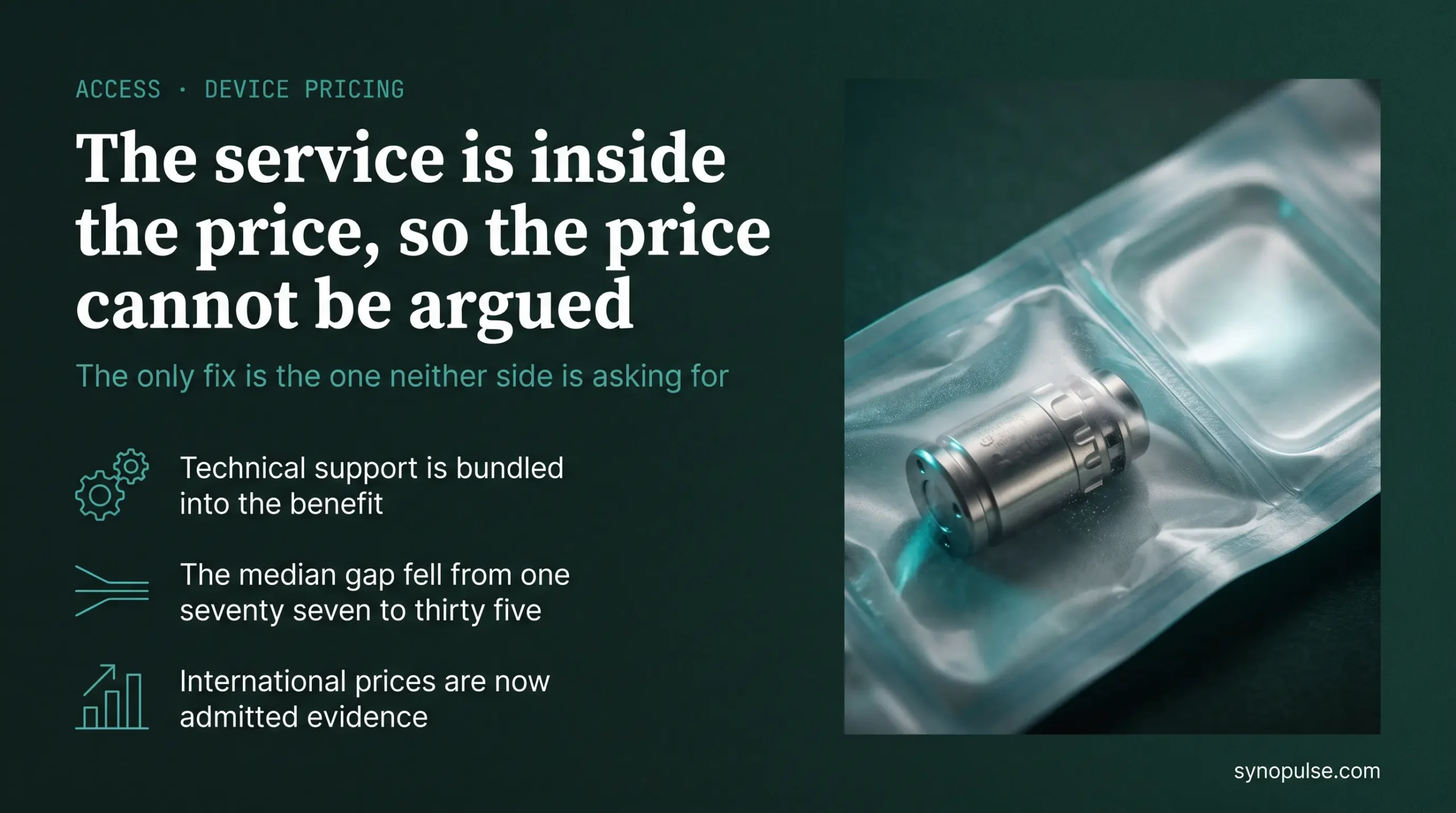
- The median gap between Prescribed List benefits and Australian public hospital benchmark prices fell from $177 to $35. A median gap of 42% above public-sector benchmarks remains in the cardiac category excluding cardiac implantable electronic devices, and deferring CIED benefit reductions by one year was estimated to have cost $94 million in forgone savings over the five years to June 2027.
- Nous judged public-sector benchmarking an appropriate and effective method, and recommended that international prices be used selectively, as a complementary source of evidence in benefit-setting decisions and post-listing reviews.
- Technical support services are bundled into Australian benefits for CIEDs and were excluded from the reductions. Nous questioned whether that should continue, arguing for a model separating technical support costs from device costs so each component can be priced appropriately. Separately, the industry association and the insurers’ association are publicly disputing international price comparisons, which the MTAA calls “fundamentally flawed, cherry-picked and wrong”.
Access read
The two sides are fighting over a number that cannot currently be produced. The industry’s defence of Australian pricing is that a benefit here includes technical support for the life of the device, where a New Zealand public procurement price does not. That objection is entirely reasonable, and it is also unfalsifiable, because the service has never been priced separately from the hardware. Nous went underneath both parties and said exactly that: separate the two so each can be funded on its own terms. It is the only recommendation in this evaluation capable of ending the argument, and it is the one neither side is campaigning for.
- Bundling is what makes the price unarguable, and the fix has already been consulted on. While service sits inside the device benefit, every international comparison can be dismissed as comparing a bundle with a component, and every price gap can be attributed to service content nobody has ever quantified. That protects the number in the short run and destroys the ability to defend it in the long run. The Department has already run a consultation on CIEDs and the cost of technical support services, so the remedy is identified, consulted and unimplemented. Any manufacturer whose cardiac margin depends on bundled service revenue should be treating unbundling as the live commercial risk, not the next benefit reduction.
- Competitive frame: international reference pricing has now entered device benefit-setting as admitted evidence. The language is carefully hedged, selectively and as a complementary source, which is how these mechanisms always begin. Reference pricing is routine for medicines and still rare for devices, and once a government’s own evaluator has written it into a recommendation it does not get written back out. The direction of travel is set even though the magnitude is not. Anyone selling devices into a system with a public benchmark should assume the same argument arrives eventually, because the appeal of borrowing another country’s price is that it costs nothing to adopt.
- What to watch: the residual 42%, and the $94 million. The cardiac gap excluding CIEDs names the target for the next round with no ambiguity at all. The deferral figure is more interesting, because a government-commissioned evaluator has now quantified what one year of delay cost the public purse, and that number will be quoted at every future request for one. Note also what remains unpublished on both sides: neither the data series behind the industry’s counter-claim on device expenditure growth nor the methodology behind the insurers’ international comparisons has been put into the public record. Nous supplied the summary that matters, observing that the interests of consumers were often lost in the process.
Read the original source (Australian Department of Health, Prescribed List reform evaluation) →
GeographyAustralia