
New Care Standard for Patients With Spinal Metastases
Patients with advanced cancer that has spread to the spine are gaining a new option to manage pain and restore mobility. The Dutch National Health Care Institute (Zorginstituut Nederland) has approved the use of bone cement injections known medically as vertebroplasty or balloon kyphoplasty for patients suffering from spinal metastases or multiple myeloma. The treatment was officially added to the national insurance package on October 27, 2025, following evidence of substantial improvements in patient quality of life.
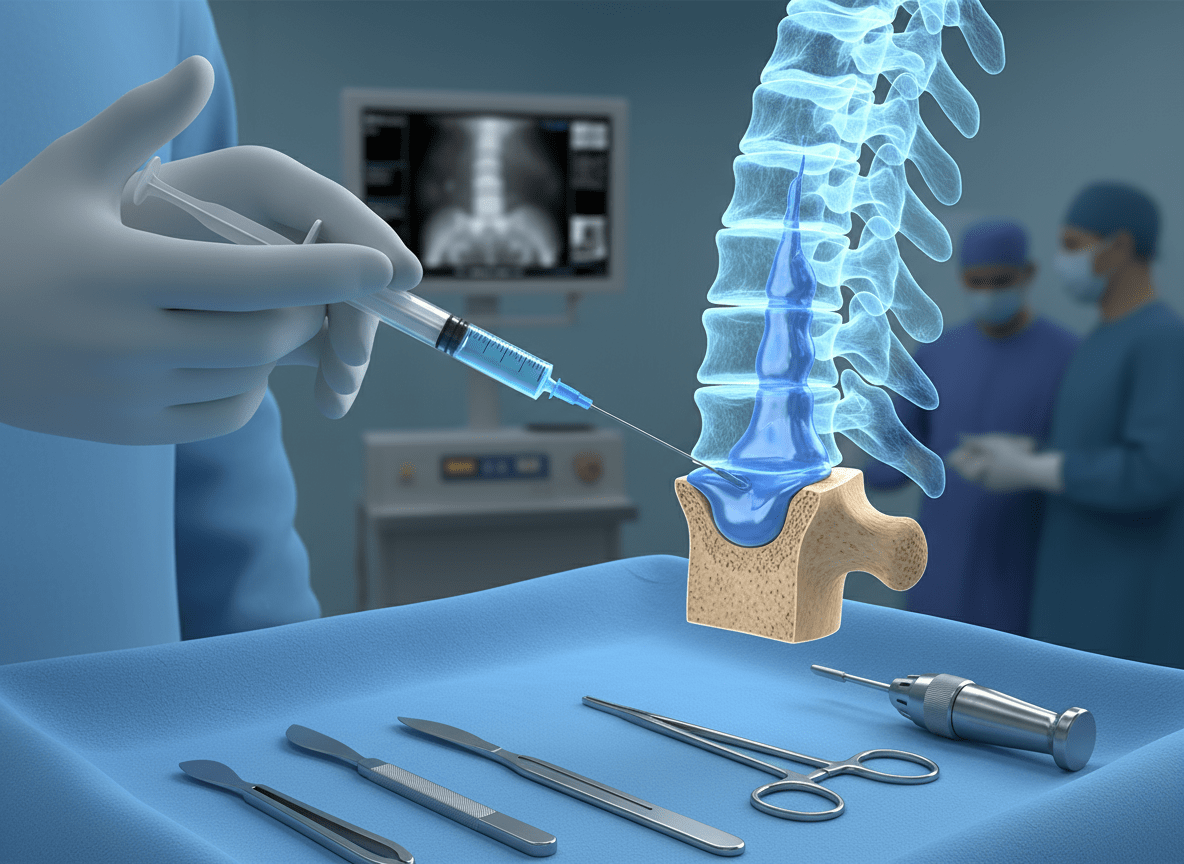
The procedure involves injecting a small amount of bone cement into the collapsed or weakened vertebra. As the cement hardens, it stabilizes the bone and alleviates pain almost immediately by preventing further collapse. For patients often living with intense, debilitating pain, the effect is transformative: less reliance on heavy opioids, improved movement, and a measurable boost in daily functioning.
What You Need To Know
- The National Health Care Institute (Zorginstituut Nederland) has added bone cement injection (vertebroplasty or balloon kyphoplasty) to the basic health insurance package.
- The treatment stabilizes vertebrae, reduces severe pain, and significantly improves mobility and quality of life.
- It is expected to benefit 900–1,300 patients annually in the Netherlands.
- Procedures will only be performed in specialized hospitals, each required to conduct at least 10 treatments per year to maintain quality standards.
According to the Zorginstituut, this inclusion marks a major step in ensuring equitable access to palliative care that directly improves comfort rather than survival time alone. “This treatment helps patients regain control of their bodies and lives,” the agency said in its announcement.
Medical societies such as the Dutch Society for Interventional Radiology supported the decision, noting that for many patients, vertebroplasty restores independence. “Patients can walk again, sleep better, and need fewer painkillers,” said one interventional radiologist quoted in the announcement. “That’s a profound change in how people spend their final months.”
To maintain quality and safety, the procedure will be centralized in designated hospitals. Only seven academic hospitals, 27 top-clinical centers, and the Antoni van Leeuwenhoek Cancer Institute are authorized to perform it. Each must carry out a minimum of ten procedures per year to ensure consistent expertise. The Zorginstituut said this volume threshold helps sustain clinical proficiency and uniform standards of care.
For the broader oncology community, the move underscores a growing recognition of palliative interventions as vital components of cancer treatment. While most policy attention gravitates toward curative therapies, the inclusion of bone cement therapy reflects a shift toward care that prioritizes quality of life and functional independence for patients in advanced disease stages.
Roughly 900 to 1,300 patients per year are expected to qualify for this therapy under the new guidance. These include people experiencing severe spinal pain due to bone metastases one of the most common complications in late-stage breast, prostate, and lung cancers as well as those with multiple myeloma, a bone marrow cancer that frequently weakens vertebral structures.
The Zorginstituut emphasized that this reimbursement decision followed rigorous assessment of clinical outcomes and cost-effectiveness data. Studies demonstrated that bone cement injections not only relieve pain but also reduce the risk of further vertebral collapse and hospitalization. By restoring spinal stability, patients can better tolerate systemic cancer treatments and maintain a level of independence in daily life.
Clinicians say the inclusion of vertebroplasty in the national package also has symbolic weight. It signals that improving comfort and dignity is an equally important metric in cancer care policy. “This isn’t about extending life it’s about improving the life that remains,” said one Dutch oncologist familiar with the review process.
The Netherlands has been steadily expanding its definition of value-based care, and this decision fits that trajectory. Concentrating the procedure in high-volume centers, with structured multidisciplinary oversight among radiologists, oncologists, and orthopaedic surgeons, aims to secure both patient safety and equitable access.
Related news
Baird Medical Secures Pivotal Reimbursement Win for MWA
In a system where innovation often focuses on next-generation drugs or precision medicine, the adoption of bone cement therapy stands out as a quietly powerful improvement in supportive oncology. It demonstrates how incremental innovations grounded in proven techniques can meaningfully restore comfort and mobility for patients facing incurable illness.
For the estimated thousand Dutch patients who will receive this therapy each year, the benefit is simple but profound: less pain, greater stability, and a chance to live the remaining days with a little more ease and independence.